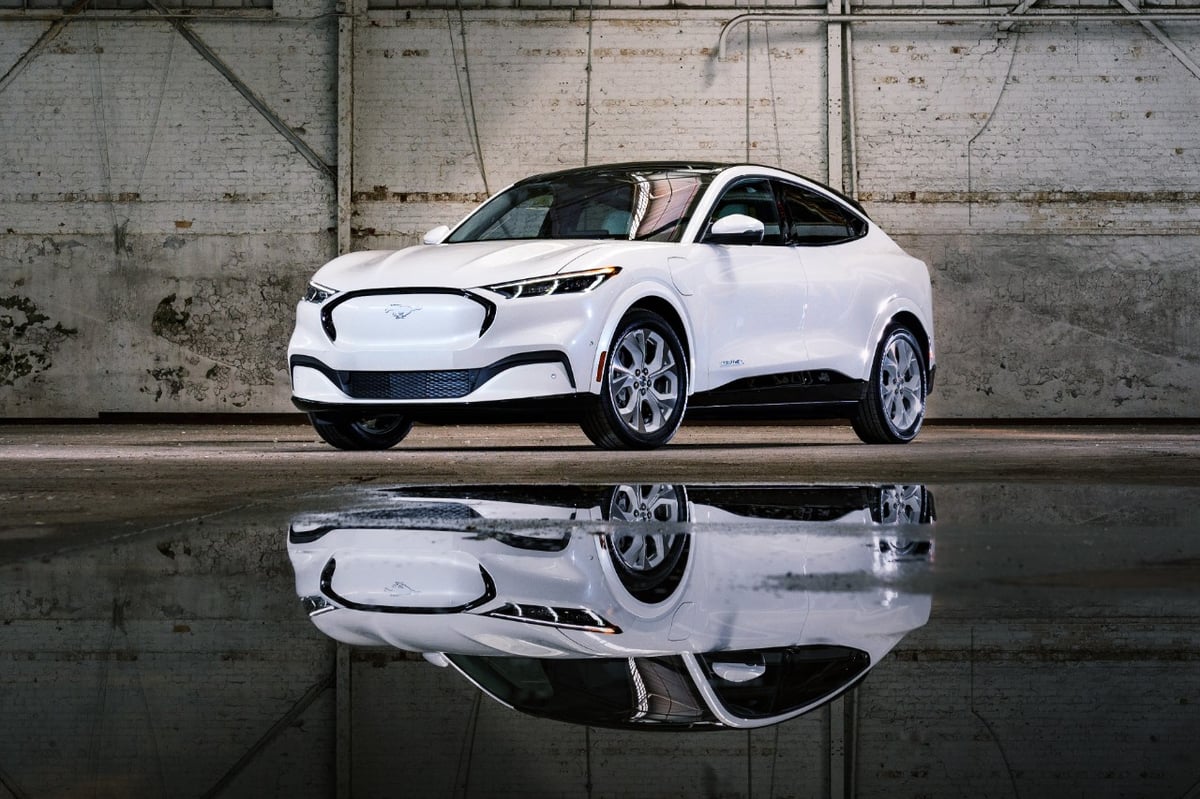
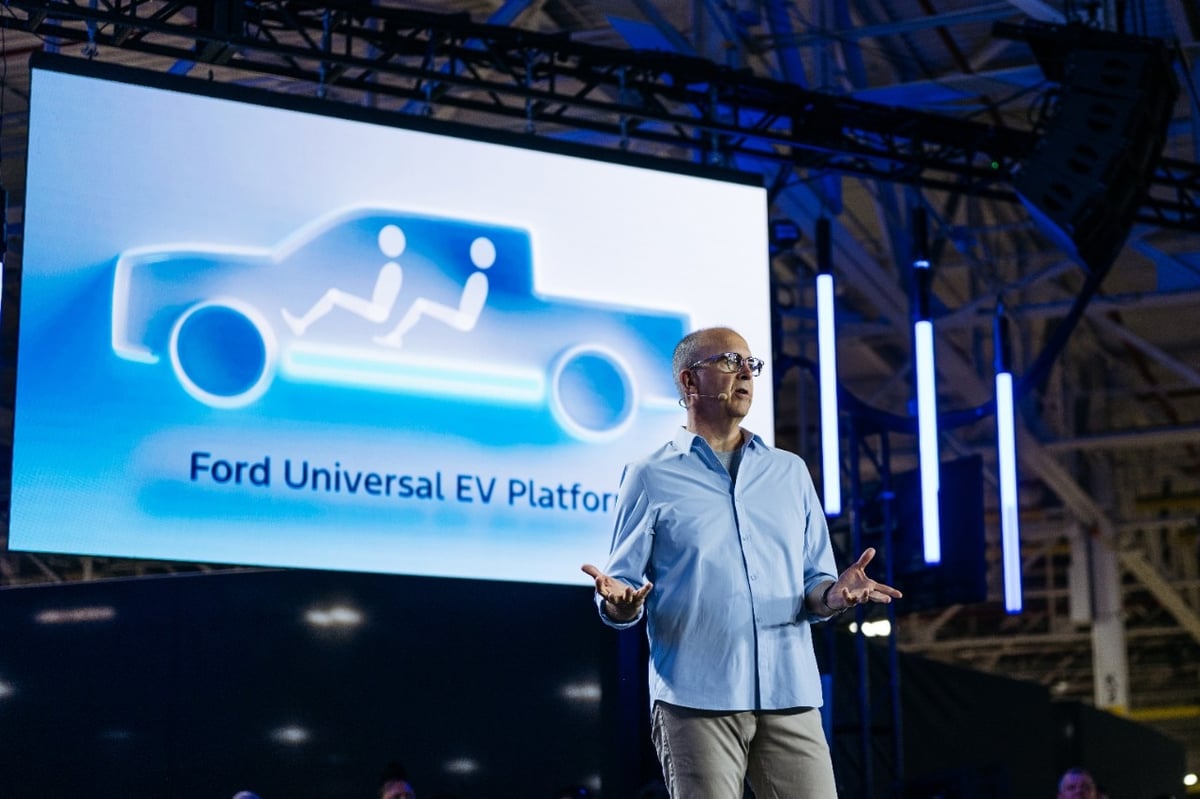
Ford Motor Co. manufactures automobiles under its Ford and Lincoln brands. In March 2022, the company announced that it will run its combustion engine business, Ford Blue, and its BEV business, Ford Model e, as separate businesses but still all under Ford Motor. The company has over 13% market share in the United States, about 10% share in the UK, and just over 1% share in China including Taiwan and unconsolidated affiliates. Sales in the US made up about 65% of 2025 total company revenue. Ford has about 169,000 employees, including about 56,300 UAW employees, and is based in Dearborn, Michigan.
The chart shows the growth of an initial investment of $10,000 in Ford Motor Company, comparing it to the performance of the S&P 500 index. All prices have been adjusted for splits and dividends.
Returns By Period
Ford Motor Company (F) has returned -11.99% so far this year and 25.13% over the past 12 months. Looking at the last ten years, F has achieved an annualized return of -1.22%, underperforming the Benchmark (SPY), which averaged 12.23% per year.
F
1M-10.39%
6M-8.16%
YTD-11.99%
1Y25.13%
5Y-1.48%
10Y-1.22%
Benchmark (SPY)
1M-3.79%
6M-2.35%
YTD-4.36%
1Y34.06%
5Y9.80%
10Y12.23%
Monthly Returns
The table below presents the monthly returns of Ford Motor Company (F) with color gradation from worst to best to easily spot seasonal factors.
Jan
Feb
Mar
Apr
May
Jun
Jul
Aug
Sep
Oct
Nov
Dec
2026
5.31%
1.66%
-17.16%
-0.17%
2025
1.72%
-1.75%
3.30%
-0.89%
2.37%
5.65%
2.41%
7.78%
1.74%
8.33%
1.37%
-0.57%
2024
-2.66%
5.25%
5.99%
-8.85%
-0.25%
2.37%
-13.85%
3.04%
-4.69%
-4.01%
7.74%
-11.76%
2023
14.30%
-10.72%
2.02%
-5.15%
-0.04%
25.40%
-12.81%
-7.76%
2.14%
-21.24%
4.32%
18.46%
2022
-4.56%
-14.80%
-2.87%
-16.75%
-2.43%
-19.81%
32.34%
3.96%
-25.83%
17.49%
2.43%
-17.46%
2021
19.52%
9.86%
3.20%
-6.03%
25.69%
0.95%
-6.44%
-7.06%
8.67%
19.78%
9.66%
5.81%
2020
-5.06%
-21.36%
-32.07%
9.94%
13.75%
6.11%
8.36%
2.56%
-1.62%
15.20%
15.96%
-4.04%
2019
16.87%
-0.79%
17.95%
-9.16%
6.34%
-7.83%
-3.78%
-0.22%
-6.53%
4.86%
2.42%
2018
-12.38%
-3.11%
4.04%
1.63%
2.67%
-5.14%
-8.89%
-5.77%
-2.94%
1.27%
-1.36%
-21.22%
2017
1.31%
0.64%
-8.06%
-1.46%
-3.22%
-0.53%
-1.23%
-0.72%
7.07%
2.25%
0.97%
-1.03%
2016
2.11%
-1.32%
-6.40%
-1.71%
-0.08%
-4.66%
-2.65%
1.53%
-0.82%
Performance Indicators
The charts below present risk-adjusted performance metrics for Ford Motor Company (F) and compare them to a Benchmark (SPY). These indicators evaluate an investment's returns against its associated risks.
Sharpe ratio
Sortino ratio
Omega ratio
Calmar ratio
Martin ratio
sharpe ratio
The Sharpe ratio helps investors understand how much return they're getting for the level of risk taken. A higher Sharpe ratio indicates better risk-adjusted performance, meaning more reward for each unit of risk.
These values reflect how efficiently the investment has delivered returns relative to its volatility over different time periods. All figures are annualized and based on daily total returns.
The chart below shows the rolling Sharpe ratio of F compared to the benchmark. This view highlights how the investment's risk-adjusted performance has changed over time.
Volatility Chart
The current Ford Motor Company volatility is 1.61%, representing the standart deviation of percentage change in the investments's value, either up or down over the past month. The chart below shows the rolling one-month volatility.
Drawdowns Chart
The Drawdowns chart displays portfolio losses from any high point along the way. It shows the maximum percentage drop from a peak to a trough over a specified period, indicating the risk of significant losses. Although chart shows positive values, it represents the percentage drop from the peak, so a value of 10% means the portfolio has dropped 10% from its highest point.
Income Statement
The income statement provides a summary of a company's revenues, expenses, and profits over a specific period. It shows how much money the company earned (revenues) and how much it spent (expenses), leading to the net income or profit. This statement is crucial for understanding a company's financial performance and profitability.
2025
2023
2022
2021
2020
2019
2018
2017
2016
2015
2014
2013
2012
2011
Liabilities And Equity (USD)
289.16B
273.31B
255.88B
257.04B
267.26B
258.54B
256.54B
257.81B
237.95B
224.93B
208.53B
202.03B
190.55B
178.35B
Temporary Equity (USD)
-
-
-
-
-
-
100.00M
98.00M
96.00M
94.00M
342.00M
331.00M
322.00M
-
Equity Attributable To Parent (USD)
35.95B
42.77B
43.24B
48.52B
30.69B
33.19B
35.93B
34.89B
29.17B
28.64B
24.81B
26.38B
15.95B
15.03B
Equity Attributable To Noncontrolling Interest (USD)
Ford Credit, which generates 15-20% of Ford's profits despite only 5% of revenue, faces a significant threat from off-lease EVs losing substantial residual value. Experian estimates off-lease EV volume will peak in 2028 with 800,000 vehicles, with resale values expected to be $10,000 less than projected, creating an $8 billion industrywide loss. While Tesla and GM have higher EV lease volumes, Ford's exposure is smaller, and the situation is less dire than 2008, but investors should monitor this through 2028.
The Motley Fool•Daniel Miller
AI Insight
Ford Credit faces significant profitability pressure from off-lease EVs with lower-than-expected residual values. While Ford's EV lease exposure is smaller than competitors, the impact on profits through 2028 could be material, though not catastrophic.
Ford Motor reported Q1 2026 sales of 457,315 units, down 8.8% year-over-year, with electrified vehicle sales plummeting 34.8% and EV sales down 69.6%. While some models like Explorer and Expedition showed strength, key vehicles like F-Series and Escape declined significantly. The stock trades at $11.57 with a Hold rating and $13.02 price target.
Benzinga•Lekha Gupta
AI Insight
Overall sales declined 8.8% YoY with significant weakness in electrified vehicles (down 34.8%) and EVs (down 69.6%). Key models like F-Series (-16.0%), Maverick (-10.9%), and Escape (-66.8%) showed substantial declines. Stock down 0.94% at publication with Hold rating.
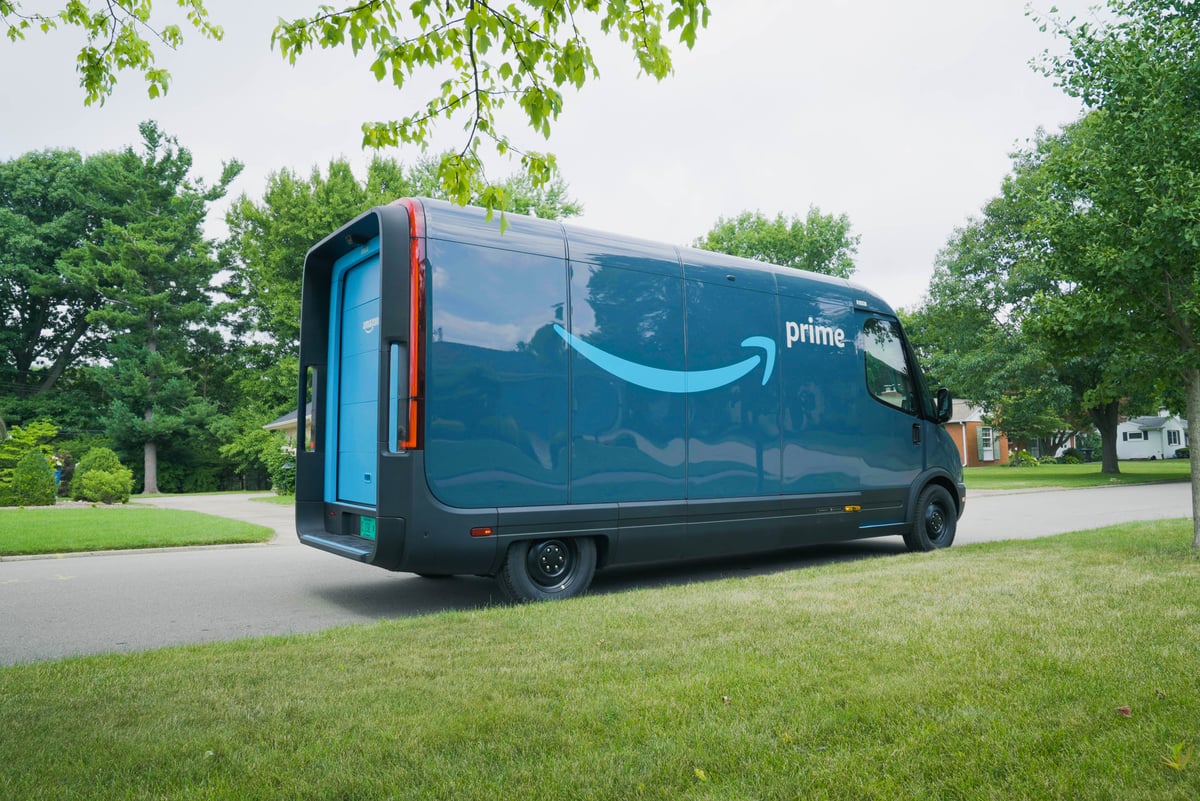
Rivian's electric delivery van (EDV) business, initially boosted by Amazon's 100,000-unit order, has disappointed with slow additional orders due to high pricing ($80,000), limited performance specs, and competition from cheaper alternatives. However, the company is positioned for a turnaround with improved unit economics, enhanced EDV performance (30% more range, all-wheel-drive), and achievement of first full-year gross profit in 2025, setting up potential for significant fleet orders in the next 18 months.
The Motley Fool•Daniel Miller
AI Insight
Ford is positioned as a competitive threat to Rivian with cheaper E-Transit offerings (mid-$50,000s vs. Rivian's $80,000) and an established service/maintenance infrastructure, giving it advantages in the commercial EV market.
The global EV battery market is expected to grow from $91.93 billion in 2024 to $251.33 billion by 2035 at a 9.6% CAGR, driven by cylindrical battery adoption, anode material innovations, and major infrastructure investments. North America is positioned for significant growth with substantial partnerships and government incentives supporting EV battery production.
GlobeNewswire Inc.•Marketsandmarkets
AI Insight
Ford's joint venture BlueOval SK received a $9.6 billion DOE loan for EV battery manufacturing, indicating strong government support and commitment to battery production expansion.
Tesla rose 4.52% on March 31 as part of a broader market rally, with investors optimistic about AI, robotics, and autonomous driving prospects. However, the stock faces scrutiny ahead of its April 2nd Q1 delivery report, which is expected to show sequential decline to 365,000-366,000 units, highlighting the gap between sentiment and weakening near-term vehicle demand.
The Motley Fool•Eric Trie
AI Insight
Ford gained 2.94% alongside the market rally and automotive sector, but receives no specific analysis or commentary in the article.
As government EV subsidies decline globally, the electric vehicle market faces a profitability crisis. Tesla maintains aggressive pricing strategy despite margin compression (17.8% in 2025), while Ford pivots toward disciplined execution, narrowing EV focus to profitable segments and accepting $4-4.5 billion losses in 2026. The sector now prioritizes capital efficiency and sustainable profitability over growth.
Investing.com•Versus Trade
AI Insight
Ford is taking a disciplined approach by narrowing EV focus, shelving unprofitable projects, and shifting toward commercial vehicles and hybrids. While facing significant losses ($4.8B in 2025, $4-4.5B projected for 2026), the strategic pivot toward capital efficiency and realistic profitability targets demonstrates prudent management under difficult market conditions.
Major tech companies made significant announcements this week: Netflix and Sony raised prices on streaming and gaming services; OpenAI warned of dependency risks on Microsoft; Arm Holdings entered chip production with its AGI CPU; Tesla reported strong delivery expectations; and various semiconductor and AI companies announced partnerships and expansions. Additionally, Snowflake laid off its documentation team in favor of AI-generated content, and a judge temporarily blocked efforts to sideline Anthropic.
Benzinga•Lekha Gupta
AI Insight
Issued recall for over 254,000 SUVs, continuing pattern of quality control issues that damage brand reputation.
Gene Munster of Deepwater Asset Management views Tesla's Q1 delivery report as a critical indicator of EV demand post-tax credit expiration. With legacy automakers like Ford, GM, and Toyota scaling back EV investments, Tesla faces limited U.S. competition, particularly with BYD absent from the market. Wall Street expects ~466,000 deliveries with 8% growth, while Tesla's focus on high-volume models and autonomy positions it for market share gains.
Benzinga•Ananya Gairola
AI Insight
Scaling back EV investments and shifting focus toward hybrids and gas-powered vehicles, indicating reduced commitment to electric vehicle market.
Ford is implementing a radical production change using 'unicasting' technology to replace hundreds of smaller components with large aluminum castings, aiming to reduce costs and compete with Chinese automakers. While the manufacturing benefits are clear, concerns exist about potential unintended consequences, particularly regarding vehicle repair costs. Early research suggests vehicles with large castings can be less expensive to fix if designed with repairability in mind, which Ford has prioritized. This production evolution is critical for Ford's long-term competitiveness against rising Chinese auto industry threats.
The Motley Fool•Daniel Miller
AI Insight
Ford is pioneering a significant production innovation with unicasting technology that could improve efficiency, reduce costs, and enhance competitiveness against Chinese rivals. Early research on repair costs is positive, and the company has designed repairability into the process from the onset, which is a long-term win for investors.
Stellantis is ticketing employees who drive non-Stellantis vehicles to work at its Michigan headquarters, forcing them to park in distant lots. The practice, implemented after a return-to-office mandate, involves warning tickets rather than fines in most cases. Ford and General Motors have reportedly used similar policies.
Benzinga•Chris Katje
AI Insight
Ford is mentioned as also using similar parking policies, but the article does not focus on Ford's implementation, so the sentiment is neutral rather than negative.