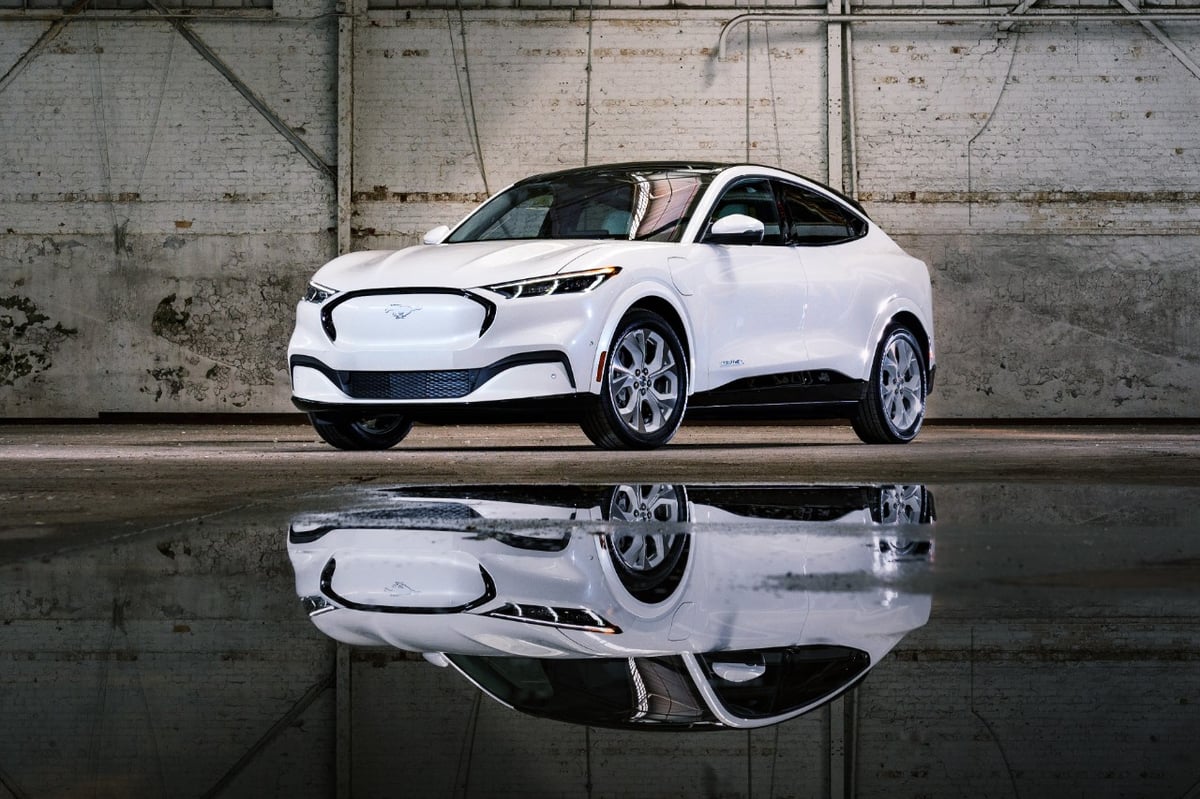
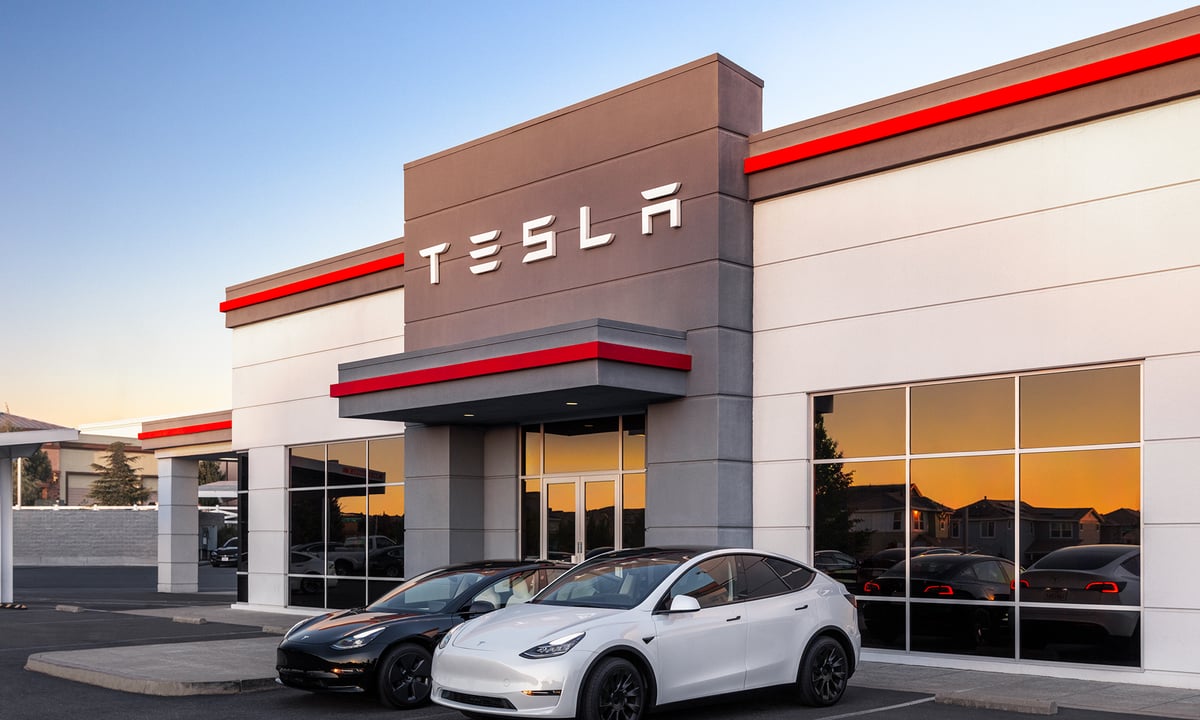
Tesla is a vertically integrated battery electric vehicle automaker and developer of real world artificial intelligence software, which includes autonomous driving and humanoid robots. The company has multiple vehicles in its fleet, which include luxury and midsize sedans, crossover SUVs, a light truck, and a semi truck. Tesla also plans to begin selling a sports car and offer a robotaxi service. Global deliveries in 2025 were nearly 1.64 million vehicles. The company sells batteries for stationary storage for residential and commercial properties including utilities and solar panels and solar roofs for energy generation. Tesla also owns a fast-charging network and an auto insurance business.
The chart shows the growth of an initial investment of $10,000 in Tesla, Inc. Common Stock, comparing it to the performance of the S&P 500 index. All prices have been adjusted for splits and dividends.
Returns By Period
Tesla, Inc. Common Stock (TSLA) has returned -21.23% so far this year and 41.20% over the past 12 months. Looking at the last ten years, TSLA has achieved an annualized return of 36.04%, outperforming the Benchmark (SPY), which averaged 12.23% per year.
TSLA
1M-9.36%
6M-18.19%
YTD-21.23%
1Y41.20%
5Y8.86%
10Y36.04%
Benchmark (SPY)
1M-3.79%
6M-2.35%
YTD-4.36%
1Y25.24%
5Y10.20%
10Y12.23%
Monthly Returns
The table below presents the monthly returns of Tesla, Inc. Common Stock (TSLA) with color gradation from worst to best to easily spot seasonal factors.
Jan
Feb
Mar
Apr
May
Jun
Jul
Aug
Sep
Oct
Nov
Dec
2026
-5.98%
-4.46%
-4.83%
-4.76%
2025
3.72%
-24.23%
-13.71%
6.96%
23.73%
-7.52%
3.29%
9.03%
35.49%
2.88%
-5.66%
5.74%
2024
-25.11%
7.10%
-12.33%
4.04%
-2.15%
11.09%
15.45%
-5.96%
21.54%
-4.88%
36.94%
14.60%
2023
46.21%
18.30%
0.61%
-17.81%
24.98%
29.21%
-3.28%
-3.07%
-2.74%
-17.96%
17.66%
6.58%
2022
-18.39%
-6.93%
23.91%
-19.46%
-11.91%
-10.82%
30.90%
-8.52%
-2.69%
-10.59%
-16.81%
-37.50%
2021
10.30%
-17.04%
-3.21%
3.06%
-11.17%
8.27%
0.48%
5.10%
5.64%
43.11%
-0.02%
-8.95%
2020
53.26%
-0.85%
-26.33%
55.13%
10.60%
25.85%
32.11%
71.93%
-14.56%
-11.96%
44.06%
18.09%
2019
0.30%
4.73%
-8.82%
-15.54%
-22.48%
20.46%
4.95%
-7.02%
7.49%
30.40%
4.31%
27.00%
2018
13.56%
-2.26%
-22.86%
14.69%
-2.99%
19.97%
-17.20%
1.23%
-10.83%
10.32%
3.61%
-7.56%
2017
17.25%
-1.21%
9.49%
9.47%
8.30%
5.12%
-12.63%
10.19%
-4.22%
-3.21%
-7.04%
1.93%
2016
-1.66%
-7.57%
-4.15%
13.90%
-9.97%
-2.38%
-6.86%
-4.36%
13.51%
Performance Indicators
The charts below present risk-adjusted performance metrics for Tesla, Inc. Common Stock (TSLA) and compare them to a Benchmark (SPY). These indicators evaluate an investment's returns against its associated risks.
Sharpe ratio
Sortino ratio
Omega ratio
Calmar ratio
Martin ratio
sharpe ratio
The Sharpe ratio helps investors understand how much return they're getting for the level of risk taken. A higher Sharpe ratio indicates better risk-adjusted performance, meaning more reward for each unit of risk.
These values reflect how efficiently the investment has delivered returns relative to its volatility over different time periods. All figures are annualized and based on daily total returns.
The chart below shows the rolling Sharpe ratio of TSLA compared to the benchmark. This view highlights how the investment's risk-adjusted performance has changed over time.
Volatility Chart
The current Tesla, Inc. Common Stock volatility is 2.53%, representing the standart deviation of percentage change in the investments's value, either up or down over the past month. The chart below shows the rolling one-month volatility.
Drawdowns Chart
The Drawdowns chart displays portfolio losses from any high point along the way. It shows the maximum percentage drop from a peak to a trough over a specified period, indicating the risk of significant losses. Although chart shows positive values, it represents the percentage drop from the peak, so a value of 10% means the portfolio has dropped 10% from its highest point.
Income Statement
The income statement provides a summary of a company's revenues, expenses, and profits over a specific period. It shows how much money the company earned (revenues) and how much it spent (expenses), leading to the net income or profit. This statement is crucial for understanding a company's financial performance and profitability.
2025
2024
2023
2022
2021
2020
2019
2018
2017
2016
2015
2014
2013
2012
2011
Liabilities And Equity (USD)
137.81B
122.07B
106.62B
82.34B
62.13B
52.15B
34.31B
29.74B
28.66B
22.66B
8.09B
5.85B
2.42B
1.11B
713.45M
Temporary Equity Attributable To Parent (USD)
-
-
-
-
-
51.00M
-
-
70.00K
-
-
-
-
-
-
Temporary Equity (USD)
58.00M
63.00M
242.00M
409.00M
568.00M
655.00M
643.00M
555.96M
397.80M
367.04M
-
-
-
-
-
Equity Attributable To Parent (USD)
82.14B
72.91B
62.63B
44.70B
30.19B
22.23B
6.62B
4.92B
4.24B
4.75B
1.09B
911.71M
667.12M
124.70M
224.05M
Equity Attributable To Noncontrolling Interest (USD)
TQQQ, a 3x leveraged ETF tracking the Nasdaq-100, has delivered 41% average annual returns over 16 years, potentially turning $10,000 into $1 million in 14 years. However, the article warns that leveraged ETFs carry significant risks and volatility, with losses amplified during market downturns. Most investors are advised to consider the non-leveraged QQQ alternative instead.
The Motley Fool•Ben Gran
AI Insight
Mentioned as a top holding in TQQQ (2.5% of fund) without specific sentiment. Included as part of the tech-heavy portfolio composition.
The article recommends the Invesco S&P 500 Equal Weight ETF (RSP) as a smart alternative to standard S&P 500 investments in April 2026. With the S&P 500 down 4% by early April due to tech sector weakness, the equal-weight approach offers better diversification and downside protection. The standard S&P 500 is heavily concentrated in tech stocks (33% in the 'Magnificent Seven'), while RSP allocates only 1.3% to these companies, making it less vulnerable to tech sector slumps.
The Motley Fool•Stefon Walters
AI Insight
Part of the 'Magnificent Seven' stocks heavily weighted in the S&P 500, contributing to concentration risk.
Rep. Pramila Jayapal and Senator Elizabeth Warren plan to reintroduce the Ultra-Millionaire Tax Act, proposing a 3% annual tax on fortunes above $50 million. The bill could generate $6.2 trillion over a decade. Meanwhile, Sen. Bernie Sanders and Rep. Ro Khanna introduced the Make Billionaires Pay Their Fair Share Act with a 5% wealth tax on billionaires. JPMorgan Chase CEO Jamie Dimon disagreed, arguing higher taxes alone won't solve underlying issues.
Benzinga•Namrata Sen
AI Insight
CEO Elon Musk cited as example of billionaire paying lower tax rate than average nurse, subject to proposed wealth tax legislation that would increase tax burden on ultra-wealthy individuals.
SpaceX's anticipated IPO, potentially valued at $1.75 trillion, could legitimize space stocks similar to how Tesla popularized electric vehicles. News of the IPO filing has already triggered rallies in space-related stocks. SpaceX's reusable rocket technology has dramatically reduced launch costs compared to the Space Shuttle era, making space travel more cost-effective and opening opportunities for smaller space companies.
The Motley Fool•James Hires
AI Insight
Used as a positive comparison model for how SpaceX's IPO could legitimize space stocks, similar to how Tesla made electric vehicles mainstream and credible.
Ford Credit, which generates 15-20% of Ford's profits despite only 5% of revenue, faces a significant threat from off-lease EVs losing substantial residual value. Experian estimates off-lease EV volume will peak in 2028 with 800,000 vehicles, with resale values expected to be $10,000 less than projected, creating an $8 billion industrywide loss. While Tesla and GM have higher EV lease volumes, Ford's exposure is smaller, and the situation is less dire than 2008, but investors should monitor this through 2028.
The Motley Fool•Daniel Miller
AI Insight
Tesla dominated EV lease volume with approximately 228,000 leases last year, making it the most exposed to off-lease EV residual value losses, with potential $8 billion industrywide impact peaking in 2028.
SpaceX has confidentially filed for an IPO with the SEC and could list as soon as June 2026. The company is seeking to raise up to $75 billion, which would be three times larger than any previous U.S. IPO. At a $1.25 trillion valuation following its merger with xAI, SpaceX's multi-layered business model includes launch services, Starlink satellite internet with recurring revenue, and significant government defense contracts worth over $24 billion.
Investing.com•Jessica Mitacek
AI Insight
Tesla is mentioned only in context of CEO Elon Musk also leading SpaceX and Neuralink. The article notes Musk would become the first CEO of two trillion-dollar publicly traded companies if SpaceX goes public at current valuation. No specific Tesla business developments or performance metrics are discussed.
Tesla's stock fell 5% after Q1 delivery figures revealed concerning trends: while year-over-year deliveries grew 6% to 358,023 vehicles, sequential deliveries dropped 14% from Q4 2025. Production exceeded deliveries by 50,000 units, suggesting demand constraints. The energy storage division also decelerated sharply. Despite these weakening fundamentals, Tesla trades at an extremely high P/E ratio of 300+, leaving little room for error. The analyst recommends waiting for a lower stock price or concrete evidence of autonomous vehicle profitability before buying.
The Motley Fool•Daniel Sparks
AI Insight
Stock declined 5.4% on disappointing Q1 results showing 14% sequential delivery decline, production outpacing sales by 50,000 units indicating demand constraints, sharp deceleration in energy storage deployment, and a sky-high P/E ratio of 300+ that doesn't align with slowing core business growth. The analyst explicitly recommends against buying at current levels.
Amazon is reportedly in discussions to acquire satellite telecommunications company Globalstar for $9 billion to accelerate its satellite broadband ambitions. The deal would help Amazon meet FCC regulatory deadlines for its Project Kuiper (Amazon Leo) satellite constellation. However, Apple's 20% stake and 85% network capacity allocation agreement with Globalstar complicates the acquisition. The move reflects intensifying competition in satellite internet, with SpaceX's Starlink already leading with over 10,000 satellites and 9 million users.
The Motley Fool•Danny Vena, Cpa
AI Insight
Tesla is mentioned due to investor interest overlap, but has no direct involvement in the Amazon-Globalstar deal. The article notes competitive dynamics in the space industry but no specific impact on Tesla.
Tesla's Q1 2026 vehicle deliveries fell 14% sequentially to 358,023 units, missing analyst expectations and signaling demand weakness. Chinese competitors BYD and Nio are gaining market share, with BYD delivering 321,000 vehicles (including hybrids) in Q1 and Nio posting 98% annual growth. While Tesla faces EV headwinds, its bull case increasingly relies on robotaxi and Optimus robot ventures rather than core vehicle sales.
The Motley Fool•Keith Noonan
AI Insight
Q1 deliveries of 358,023 units fell 14% sequentially and missed analyst estimates of 370,000. Year-over-year growth of only 6% indicates slowing demand. The company faces significant pressure from Chinese competitors and core EV business appears to be struggling.
U.S. stock markets opened sharply lower on April 2, 2026, amid Iran conflict concerns and Tesla's disappointing delivery report, but recovered to near breakeven by midday. Oil prices surged 10% following Trump's Wednesday address, though reports of Iran-Oman negotiations on Strait of Hormuz traffic helped stabilize stocks. Tesla's first-quarter deliveries fell short of expectations, while healthcare stocks declined on tariff concerns.
The Motley Fool•Anders Bylund
AI Insight
Tesla reported Q1 deliveries of 358,023 vehicles, falling short of Wall Street's expectation of ~366,000. The company's energy storage segment also disappointed investors, causing a 5.6% stock decline.