Rivian Automotive, Inc. Class A Common Stock (RIVN)
Common Stock · Currency in USD · XNAS
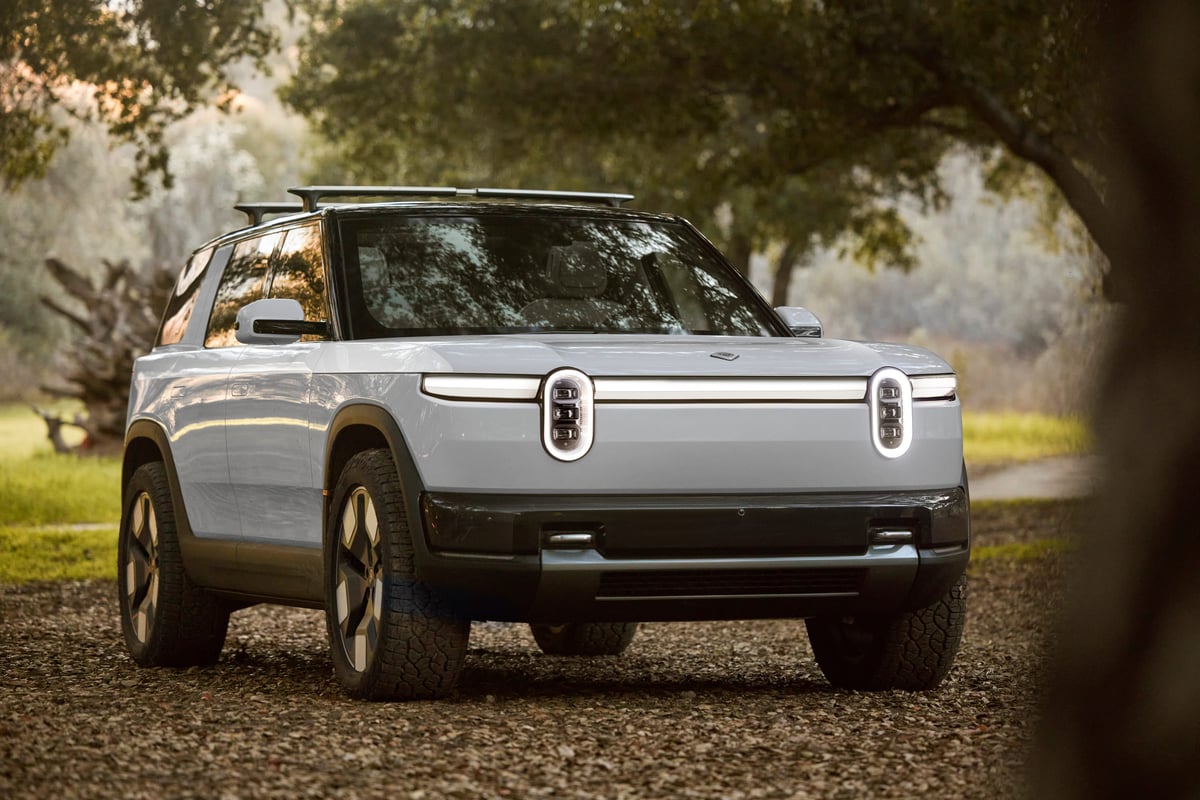
Rivian is a battery electric vehicle automaker that sells its vehicles in the US and Canada. The company also develops electronic control units and related software for autos in a joint venture with Volkswagen. Rivian has multiple vehicles in its fleet, which include a luxury truck and full-size SUV and a delivery van. The company plans to begin selling a midsize SUV in 2026. Total deliveries were over 42,000 in 2025. Rivian is also developing autonomous driving software to be used in its vehicles.
The chart shows the growth of an initial investment of $10,000 in Rivian Automotive, Inc. Class A Common Stock, comparing it to the performance of the S&P 500 index. All prices have been adjusted for splits and dividends.
Returns By Period
Rivian Automotive, Inc. Class A Common Stock (RIVN) has returned -22.14% so far this year and 45.70% over the past 12 months. Looking at the last ten years, RIVN has achieved an annualized return of -17.60%, underperforming the Benchmark (SPY), which averaged 12.23% per year.
RIVN
1M2.80%
6M12.16%
YTD-22.14%
1Y45.70%
5Y-32.11%
10Y-17.60%
Benchmark (SPY)
1M-3.79%
6M-2.35%
YTD-4.36%
1Y34.06%
5Y9.80%
10Y12.23%
Monthly Returns
The table below presents the monthly returns of Rivian Automotive, Inc. Class A Common Stock (RIVN) with color gradation from worst to best to easily spot seasonal factors.
Jan
Feb
Mar
Apr
May
Jun
Jul
Aug
Sep
Oct
Nov
Dec
2026
-25.43%
4.32%
0.33%
-0.87%
2025
-5.92%
-1.50%
3.75%
9.59%
5.90%
-4.58%
-4.98%
7.27%
10.38%
-8.22%
24.43%
19.09%
2024
-29.95%
-27.16%
-2.23%
-19.02%
23.39%
20.60%
21.92%
-13.84%
-19.51%
-9.82%
19.78%
8.39%
2023
2.65%
-1.03%
-12.29%
-16.10%
15.03%
15.45%
54.93%
-16.40%
5.57%
-32.22%
3.14%
39.60%
2022
-38.06%
0.42%
-23.22%
-39.74%
4.88%
-18.67%
32.38%
-4.64%
1.95%
6.87%
-11.37%
-42.34%
2021
12.19%
-13.98%
Performance Indicators
The charts below present risk-adjusted performance metrics for Rivian Automotive, Inc. Class A Common Stock (RIVN) and compare them to a Benchmark (SPY). These indicators evaluate an investment's returns against its associated risks.
Sharpe ratio
Sortino ratio
Omega ratio
Calmar ratio
Martin ratio
sharpe ratio
The Sharpe ratio helps investors understand how much return they're getting for the level of risk taken. A higher Sharpe ratio indicates better risk-adjusted performance, meaning more reward for each unit of risk.
These values reflect how efficiently the investment has delivered returns relative to its volatility over different time periods. All figures are annualized and based on daily total returns.
The chart below shows the rolling Sharpe ratio of RIVN compared to the benchmark. This view highlights how the investment's risk-adjusted performance has changed over time.
Volatility Chart
The current Rivian Automotive, Inc. Class A Common Stock volatility is 3.72%, representing the standart deviation of percentage change in the investments's value, either up or down over the past month. The chart below shows the rolling one-month volatility.
Drawdowns Chart
The Drawdowns chart displays portfolio losses from any high point along the way. It shows the maximum percentage drop from a peak to a trough over a specified period, indicating the risk of significant losses. Although chart shows positive values, it represents the percentage drop from the peak, so a value of 10% means the portfolio has dropped 10% from its highest point.
Income Statement
The income statement provides a summary of a company's revenues, expenses, and profits over a specific period. It shows how much money the company earned (revenues) and how much it spent (expenses), leading to the net income or profit. This statement is crucial for understanding a company's financial performance and profitability.
2025
2024
2023
2022
2021
Liabilities And Equity (USD)
14.86B
15.41B
16.78B
17.88B
22.29B
Temporary Equity Attributable To Parent (USD)
-
-
-
-
-
Temporary Equity (USD)
-
-
-
-
-
Equity Attributable To Parent (USD)
4.57B
6.56B
9.14B
13.80B
19.51B
Equity Attributable To Noncontrolling Interest (USD)
Rivian's partnership with Uber, committing up to $1.25 billion through 2031 for autonomous vehicle development, represents a major long-term opportunity beyond the R2 launch. The deal includes deploying 10,000 robotaxi R2s across major U.S. cities and international markets by 2031. More importantly, Rivian is transitioning from a hardware automaker to a higher-margin software-defined vehicle platform, leveraging its vertical integration, proprietary software, and partnerships with companies like Volkswagen Group.
The Motley Fool•Daniel Miller
AI Insight
Major partnership with Uber providing $1.25B in funding through 2031, strategic shift toward higher-margin software-defined vehicles, third-generation autonomy platform launching in R2, and successful partnership with Volkswagen Group demonstrating market validation and path to profitability.
SpaceX's anticipated IPO, potentially valued at $1.75 trillion, could legitimize space stocks similar to how Tesla popularized electric vehicles. News of the IPO filing has already triggered rallies in space-related stocks. SpaceX's reusable rocket technology has dramatically reduced launch costs compared to the Space Shuttle era, making space travel more cost-effective and opening opportunities for smaller space companies.
The Motley Fool•James Hires
AI Insight
Mentioned only as an EV manufacturer attempting to replicate Tesla's success; no direct connection to the SpaceX IPO story.
Despite the EV market slowdown in recent years, the global EV market is projected to expand at 32.5% CAGR through 2030. Rivian and Nio are highlighted as undervalued EV stocks with strong growth potential. Rivian expects its cheaper R2 SUV to boost sales and margins, with revenue projected to grow 45% CAGR from 2025-2028. Nio, a Chinese EV leader, has surged deliveries from 20,565 to 326,028 annually and is expanding internationally, with revenue expected to grow 31% CAGR from 2025-2027.
The Motley Fool•Leo Sun
AI Insight
Trading at only 3x sales versus Tesla's 14x, with expected 45% revenue CAGR through 2028, positive EBITDA by 2028, and significant production growth planned through new Georgia plant and R2/R3 launches.
Tesla delivered 358,000 vehicles in Q1 2026 and deployed 8.8 GWh of energy storage products, with China-made EV sales up 8.7% year-over-year. Despite strong operational metrics, the stock declined 3.95% as the Consumer Discretionary sector faced broader pressure. Analysts maintain a Buy rating with a $418.28 price target, and earnings are expected on April 21.
Benzinga•Lekha Gupta
AI Insight
Rivian fell consecutively for 4 months in the U.S. as it prepares to launch the R2 Crossover SUV, indicating sustained weakness in the company's stock performance.
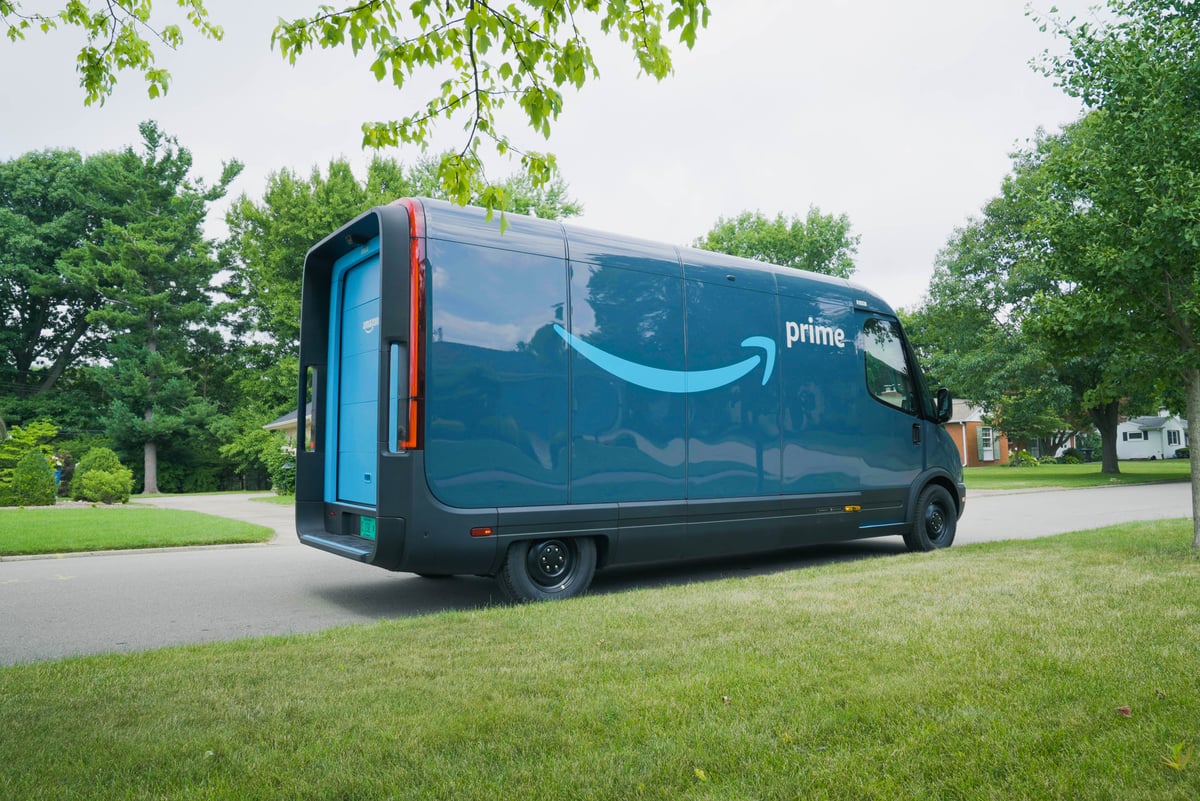
Rivian's electric delivery van (EDV) business, initially boosted by Amazon's 100,000-unit order, has disappointed with slow additional orders due to high pricing ($80,000), limited performance specs, and competition from cheaper alternatives. However, the company is positioned for a turnaround with improved unit economics, enhanced EDV performance (30% more range, all-wheel-drive), and achievement of first full-year gross profit in 2025, setting up potential for significant fleet orders in the next 18 months.
The Motley Fool•Daniel Miller
AI Insight
Company faces near-term challenges with slow EDV adoption and pricing disadvantages versus competitors, but has made strategic improvements in cost-cutting and achieved profitability. Positioned for potential growth with product enhancements and upcoming orders, though execution risk remains.
Tesla and Rivian represent different investment strategies in the EV market. Rivian, with a $19B market cap, recently secured a major deal with Uber for 50,000 autonomous robotaxis by 2031 and expects 62,000-67,000 vehicle deliveries in 2026. Tesla, valued at $1.4T, delivered 1.63M vehicles in 2025 but is pivoting toward humanoid robot production (Optimus), with analysts projecting a $9T market opportunity by 2050. The choice between them depends on investment objectives: Rivian for pure-play EV exposure, Tesla for broader robotics and autonomous technology exposure.
The Motley Fool•Patrick Sanders
AI Insight
Rivian secured a significant $1.25B partnership with Uber for 50,000 autonomous robotaxis, providing capital and visibility. Expected 2026 deliveries of 62,000-67,000 units show growth trajectory, and upcoming R2 model at $45,000 price point targets mass market demand.
Uber agreed to invest up to $1.25 billion in Rivian and purchase up to 50,000 self-driving R2 vehicles through 2031. While the deal provides Rivian with cash and guaranteed deployment on Uber's network, Rivian postponed its 2027 profitability goal due to increased R&D spending for autonomous vehicle development. The author argues this trade-off is worthwhile since Rivian gains access to an established ride-hailing network without building one itself.
The Motley Fool•John Rosevear
AI Insight
Receives $1.25B investment, guaranteed robotaxi sales of 10,000+ vehicles, and access to Uber's established network for deployment. Despite postponing 2027 profitability goal, the deal provides strategic advantages and near-term cash flow that outweigh the R&D cost increase.
Rivian stock has lost 91% of its value since 2021, but the article argues it presents a turnaround opportunity. Three catalysts are cited: rising oil prices from Middle East conflicts boosting EV demand, the launch of an affordable R2 SUV under $60,000, and growing software/services revenue through partnerships with Volkswagen and Uber. However, the company faces challenges with declining revenue and significant operating losses.
The Motley Fool•Will Ebiefung
AI Insight
The article identifies multiple growth catalysts including strategic partnerships (Volkswagen, Uber), new affordable vehicle launches (R2 SUV), growing software/services revenue, and favorable market conditions from rising oil prices. Despite current financial challenges, the author frames these as temporary setbacks with strong recovery potential.
Rivian stock has become cheaper following a market correction, with two key growth catalysts intact: the upcoming R2 SUV launch at $45,000 (targeting mass-market consumers) and undervalued AI exposure. The company's AI strategy spans factory optimization, in-vehicle entertainment, and autonomous driving. Uber's $1.25 billion investment deal for 50,000 R2 vehicles validates Rivian's AI capabilities, though autonomy milestone achievement remains uncertain.
The Motley Fool•Ryan Vanzo
AI Insight
Stock trading at attractive 3.2x sales valuation after market correction; R2 launch at $45,000 targets mass-market consumers similar to Tesla's Model 3/Y success; Uber's $1.25B investment validates AI capabilities and autonomous driving potential; multiple growth catalysts intact for 2026.
Tesla faces an unusual competitive landscape in 2026. While pure-play EV makers like Rivian are scaling up production with three new SUV models under $50,000 to compete with the Model Y, traditional automakers Ford and General Motors are scaling back their EV ambitions due to slowing demand and fading incentives. Tesla maintains over 50% of the U.S. EV market, with the Model Y accounting for over 80% of its unit volumes.
The Motley Fool•Ryan Vanzo
AI Insight
Rivian is positioned as the biggest potential Tesla competitor with three new SUV models (R2, R3, R3X) launching under $50,000, scaling production while competitors retreat. This represents significant growth opportunity in the EV market.