The global molecular diagnostics market is projected to grow from USD 18.26 billion in 2025 to USD 43.50 billion by 2035, with a CAGR of 9.07%. Growth is driven by increasing demand for early and accurate disease detection, rising prevalence of chronic diseases, and adoption of advanced technologies like PCR and next-generation sequencing. The U.S. market is expected to grow from USD 5.0 billion to USD 8.07 billion during the same period.
Abbott Laboratories (ABT)
Common Stock · Currency in USD · XNYS
Abbott manufactures and markets cardiovascular and diabetes devices, adult and pediatric nutritional products, diagnostic equipment and testing kits, and branded generic drugs. Products include pacemakers, implantable cardioverter defibrillators, neuromodulation devices, coronary stents, catheters, infant formula, nutritional liquids for adults, continuous glucose monitors, and immunoassays and point-of-care diagnostic equipment. Abbott derives roughly 60% of sales outside the United States.
Company Info
SIC2834
Composite FIGIBBG000B9ZXB4
CIK0000001800
IPOApr 19, 1949
Sectorpharmaceutical preparations
Highlights
Market Cap$178.75B
EPS$4.08
P/E Ratio25.12
Revenue$43.00B
Gross Profit$25.15B
Net Income$7.12B
Employees115,000
WSO1,737,674,869
Phone(224) 667-6100
Websitehttps://www.abbott.com
Related Tickers

ISRG
Intuitive Surgical Inc.
$454.29 0.00%

MDT
Medtronic plc
$86.18 0.00%

DXCM
DexCom, Inc.
$63.00 0.00%

ABBV
ABBVIE INC.
$208.27 0.00%

ITGR
Integer Holdings Corporation
$86.85 0.00%

ELV
Elevance Health, Inc.
$302.00 0.00%

TMO
Thermo Fisher Scientific, Inc.
$489.90 0.00%

BSX
Boston Scientific Corp.
$62.80 0.00%

JNJ
Johnson & Johnson
$242.50 0.00%

TSLA
Tesla, Inc. Common Stock
$361.26 0.00%
Analysis
Share Price Chart
Performance Chart
The chart shows the growth of an initial investment of $10,000 in Abbott Laboratories, comparing it to the performance of the S&P 500 index.
All prices have been adjusted for splits and dividends.
Returns By Period
Abbott Laboratories (ABT) has returned -17.51% so far this year and -15.88% over the past 12 months. Looking at the last ten years, ABT has achieved an annualized return of 9.28%, underperforming the Benchmark (SPY), which averaged 12.23% per year.
ABT
1M-8.11%
6M-23.41%
YTD-17.51%
1Y-15.88%
5Y-3.12%
10Y9.28%
Benchmark (SPY)
1M-3.85%
6M-2.35%
YTD-4.36%
1Y34.06%
5Y9.80%
10Y12.23%
Monthly Returns
The table below presents the monthly returns of Abbott Laboratories (ABT) with color gradation from worst to best to easily spot seasonal factors.
| Jan | Feb | Mar | Apr | May | Jun | Jul | Aug | Sep | Oct | Nov | Dec | |
|---|---|---|---|---|---|---|---|---|---|---|---|---|
| 2026 | -12.35% | 6.52% | -11.15% | 0.03% | ||||||||
| 2025 | 12.53% | 8.97% | -4.00% | -1.30% | 3.15% | 2.37% | -6.90% | 5.73% | 0.95% | -8.29% | 4.20% | -2.61% |
| 2024 | 3.28% | 5.22% | -4.14% | -6.77% | -3.53% | 1.70% | 1.71% | 6.21% | 0.57% | -0.74% | -0.82% | -4.75% |
| 2023 | 0.04% | -8.18% | 0.56% | 9.59% | -7.66% | 6.98% | 2.85% | -7.05% | -6.33% | -1.26% | 9.95% | 5.61% |
| 2022 | -8.58% | -5.30% | -1.62% | -4.49% | 3.49% | -7.81% | 0.58% | -5.29% | -5.47% | 1.17% | 7.99% | 1.43% |
| 2021 | 12.84% | -2.81% | -0.95% | -0.17% | -3.24% | 5.25% | 4.64% | 4.01% | -6.04% | 9.04% | -2.23% | 11.27% |
| 2020 | 1.25% | -12.25% | 1.32% | 19.60% | 4.31% | -1.64% | 9.42% | 8.30% | -0.09% | -3.73% | 1.06% | 0.23% |
| 2019 | 3.68% | 6.30% | 2.50% | -1.38% | -4.06% | 10.30% | 2.78% | -2.13% | -0.90% | -0.50% | 1.62% | 1.51% |
| 2018 | 6.80% | -2.30% | -0.40% | -2.83% | 6.64% | -1.57% | 8.10% | 2.28% | 9.92% | -6.60% | 7.18% | -2.64% |
| 2017 | 8.12% | 8.60% | -2.12% | -1.76% | 4.80% | 6.79% | 0.92% | 3.52% | 4.57% | 1.10% | 4.60% | 1.37% |
| 2016 | -6.33% | 2.01% | -0.15% | 13.84% | -6.10% | 0.88% | -6.70% | -2.98% | 0.76% |
Performance Indicators
The charts below present risk-adjusted performance metrics for Abbott Laboratories (ABT) and compare them to a Benchmark (SPY). These indicators evaluate an investment's returns against its associated risks.
Sharpe ratio
Sortino ratio
Omega ratio
Calmar ratio
Martin ratio
sharpe ratio
The Sharpe ratio helps investors understand how much return they're getting for the level of risk taken. A higher Sharpe ratio indicates better risk-adjusted performance, meaning more reward for each unit of risk.
These values reflect how efficiently the investment has delivered returns relative to its volatility over different time periods. All figures are annualized and based on daily total returns.
The chart below shows the rolling Sharpe ratio of ABT compared to the benchmark. This view highlights how the investment's risk-adjusted performance has changed over time.
Volatility Chart
The current Abbott Laboratories volatility is 1.29%, representing the standart deviation of percentage change in the investments's value, either up or down over the past month. The chart below shows the rolling one-month volatility.
Drawdowns Chart
The Drawdowns chart displays portfolio losses from any high point along the way. It shows the maximum percentage drop from a peak to a trough over a specified period, indicating the risk of significant losses.
Although chart shows positive values, it represents the percentage drop from the peak, so a value of 10% means the portfolio has dropped 10% from its highest point.
Income Statement
The income statement provides a summary of a company's revenues, expenses, and profits over a specific period. It shows how much money the company earned (revenues) and how much it spent (expenses), leading to the net income or profit. This statement is crucial for understanding a company's financial performance and profitability.
| 2025 | 2024 | 2023 | 2022 | 2021 | 2020 | 2019 | 2018 | 2017 | 2016 | 2015 | 2014 | 2013 | 2012 | 2011 | |
|---|---|---|---|---|---|---|---|---|---|---|---|---|---|---|---|
| Liabilities And Equity (USD) | 86.71B | 81.41B | 73.21B | 74.44B | 75.20B | 72.55B | 67.89B | 67.17B | 76.25B | 52.67B | 41.25B | 41.28B | 42.95B | 67.23B | 60.28B |
| Equity Attributable To Parent (USD) | 52.13B | 47.66B | 38.60B | 36.69B | 35.80B | 32.78B | 31.09B | 30.52B | 30.90B | 20.54B | 21.21B | 21.53B | 25.17B | 26.72B | 24.44B |
| Equity Attributable To Noncontrolling Interest (USD) | 641.00M | 237.00M | 224.00M | 219.00M | 222.00M | 219.00M | 213.00M | 198.00M | 201.00M | 179.00M | 115.00M | 113.00M | 96.00M | 92.27M | 86.31M |
| Equity (USD) | 52.77B | 47.90B | 38.83B | 36.91B | 36.02B | 33.00B | 31.30B | 30.72B | 31.10B | 20.72B | 21.33B | 21.64B | 25.27B | 26.81B | 24.53B |
| Other Non-current Liabilities (USD) | 4.52B | 5.23B | 5.87B | 5.27B | 8.02B | 9.10B | 7.79B | 8.07B | 8.52B | 4.61B | 4.86B | 5.64B | 4.78B | 8.75B | 7.20B |
| Long-term Debt (USD) | 12.93B | 14.13B | 14.68B | 16.77B | 18.05B | 18.53B | 17.94B | 19.37B | 27.72B | 20.68B | 5.87B | 3.46B | 3.40B | 18.39B | 13.07B |
| Noncurrent Liabilities (USD) | 17.45B | 19.36B | 20.55B | 22.04B | 26.07B | 27.64B | 25.72B | 27.44B | 36.24B | 25.29B | 10.74B | 9.10B | 8.18B | 27.14B | 20.27B |
| Other Current Liabilities (USD) | 14.75B | 12.46B | 12.24B | 13.93B | 11.48B | 10.49B | 9.63B | 7.83B | 7.73B | 5.91B | 8.44B | 9.76B | 8.60B | 11.85B | 14.22B |
| Wages (USD) | 1.75B | 1.70B | 1.60B | 1.56B | 1.63B | 1.42B | 1.24B | 1.18B | 1.19B | 752.00M | 746.00M | 776.00M | 906.00M | 1.43B | 1.26B |
| Current Liabilities (USD) | 16.50B | 14.16B | 13.84B | 15.49B | 13.11B | 11.91B | 10.86B | 9.01B | 8.91B | 6.66B | 9.19B | 10.53B | 9.51B | 13.28B | 15.48B |
| Liabilities (USD) | 33.94B | 33.51B | 34.39B | 37.53B | 39.17B | 39.55B | 36.59B | 36.45B | 45.15B | 31.95B | 19.92B | 19.64B | 17.69B | 40.42B | 35.75B |
| Other Non-current Assets (USD) | 43.38B | 40.45B | 31.58B | 29.60B | 29.26B | 28.29B | 27.16B | 26.04B | 27.02B | 15.65B | 15.80B | 13.88B | 12.07B | 19.26B | 18.64B |
| Intangible Assets (USD) | 5.53B | 6.65B | 8.82B | 10.45B | 12.74B | 14.78B | 17.03B | 18.94B | 21.47B | 4.54B | 5.56B | 6.20B | 5.74B | 8.59B | 9.99B |
| Fixed Assets (USD) | 11.82B | 10.66B | 10.15B | 9.16B | 8.96B | 9.03B | 8.04B | 7.56B | 7.61B | 5.71B | 5.73B | 5.94B | 5.91B | 8.06B | 7.87B |
| Noncurrent Assets (USD) | 60.72B | 57.76B | 50.54B | 49.21B | 50.96B | 52.11B | 52.22B | 52.54B | 56.10B | 25.89B | 27.09B | 26.01B | 23.71B | 35.91B | 36.51B |
| Other Current Assets (USD) | 19.51B | 17.46B | 16.10B | 19.05B | 19.08B | 15.43B | 11.35B | 10.84B | 16.55B | 24.34B | 11.56B | 12.62B | 16.55B | 27.53B | 20.48B |
| Inventory (USD) | 6.49B | 6.19B | 6.57B | 6.17B | 5.16B | 5.01B | 4.32B | 3.80B | 3.60B | 2.43B | 2.60B | 2.64B | 2.69B | 3.79B | 3.28B |
| Current Assets (USD) | 26.00B | 23.66B | 22.67B | 25.22B | 24.24B | 20.44B | 15.67B | 14.63B | 20.15B | 26.78B | 14.16B | 15.26B | 19.25B | 31.32B | 23.77B |
| Assets (USD) | 86.71B | 81.41B | 73.21B | 74.44B | 75.20B | 72.55B | 67.89B | 67.17B | 76.25B | 52.67B | 41.25B | 41.28B | 42.95B | 67.23B | 60.28B |
News and Insights
The global drug screening market is projected to reach USD 20.86 billion by 2031, growing at a CAGR of 16.16%. Chromatography and mass spectrometry technologies dominated with 44.77% market share in 2025. Asia-Pacific is the fastest-growing region, driven by expanding healthcare infrastructure and workplace safety initiatives. Market growth is fueled by increasing adoption across workplaces, healthcare settings, and law enforcement, alongside technological advancements in point-of-care testing and rapid detection devices.
The Schwab U.S. Dividend Equity ETF (SCHD) completed its annual reconstitution, adding UnitedHealth and Abbott Laboratories while removing AbbVie. These changes increased the fund's healthcare sector allocation from 15.4% to 18.9%, making it the second-largest sector weighting. The new holdings have a higher average dividend growth rate (9.4% vs 8.6%), which should generate more income and potentially higher total returns for investors over time.

Major M&A activity continues with Estée Lauder in merger discussions with Puig ($40B), KKR acquiring Nothing Bundt Cakes ($2B+), and Amazon acquiring robotics firm Fauna. Other significant deals include Corebridge-Equitable Holdings merger ($22B), Merck's acquisition of Terns Pharmaceuticals ($6.7B), and Abbott closing its Exact Sciences deal ($21B). Several companies filed for bankruptcy including 23andMe and Applebee's franchisee NRPF.
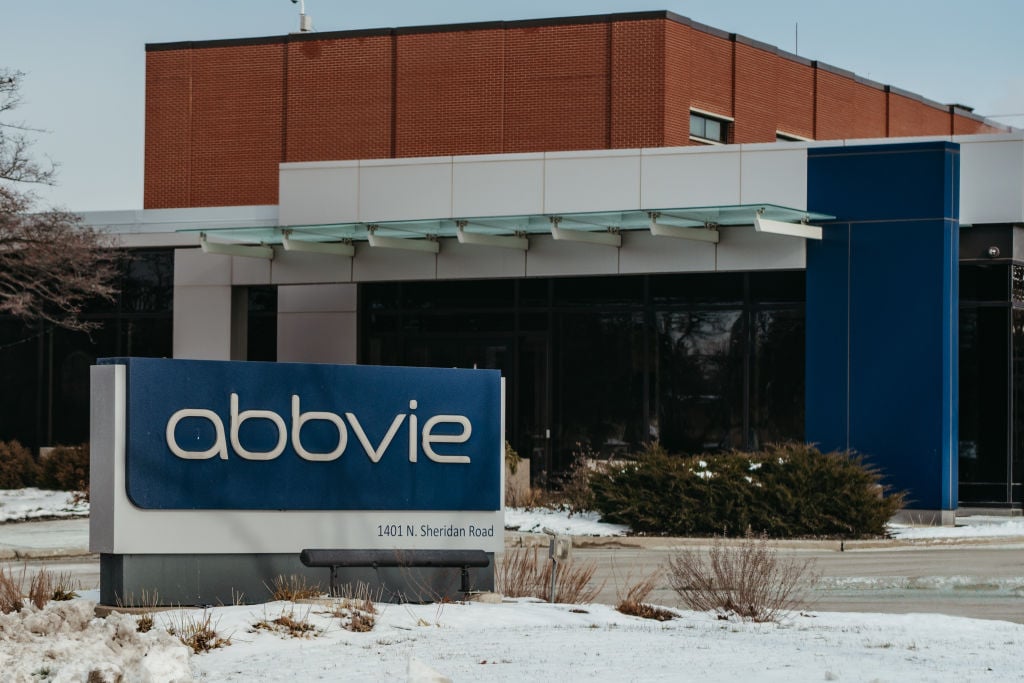
AbbVie and Bristol Myers Squibb are highlighted as exceptions in the healthcare sector, offering above-average dividend yields and consistent dividend growth. AbbVie, a Dividend King with a 3.4% yield, has successfully transitioned from its blockbuster drug Humira to new treatments Skyrizi and Rinvoq. Bristol Myers Squibb, yielding 4.4%, is navigating patent cliffs through innovation in its oncology portfolio, making both attractive for patient, buy-and-hold dividend investors.

The article recommends two defensive healthcare stocks for portfolio protection during market uncertainty: Abbott Laboratories, a diversified healthcare company with four business units and a 50+ year dividend growth track record, and Intuitive Surgical, the global leader in robotic surgery with strong competitive advantages through surgeon training and recurring accessory revenue.

Abbott Laboratories stock has declined 22% following disappointing quarterly results with weak diagnostic and nutrition segments. However, the article argues it presents a buying opportunity due to strong medical device performance (up 12.3%), promising growth prospects in continuous glucose monitoring and structural heart products, a $21 billion acquisition of Exact Sciences to boost diagnostics, and an impressive dividend track record with 54 consecutive years of increases.
The global IV solutions market is projected to grow from USD 13.35 billion in 2025 to USD 29.47 billion by 2035, with a CAGR of 8.24%. Growth is driven by increasing prevalence of chronic diseases, rising hospital admissions, and growing demand for parenteral nutrition and critical care solutions. The U.S. market alone is expected to reach USD 8.39 billion by 2035. North America leads with 40.70% market share, while Asia-Pacific shows the fastest growth at 9.46% CAGR.

The article recommends Johnson & Johnson and AbbVie as top dividend stocks for long-term investors. Both companies are Dividend Kings with 50+ years of consecutive dividend increases, diversified product portfolios, and strong track records of navigating patent cliffs through innovation. Johnson & Johnson boasts over 100 years of history and consistent revenue growth, while AbbVie demonstrates resilience with successful product launches like Skyrizi and Rinvoq offsetting patent expirations.
The global personalized nutrition market is projected to grow from $15.79 billion in 2025 to $30.94 billion by 2030 at a 14.4% CAGR. Digital tools and active measurement technologies are the fastest-growing segments, while Asia Pacific emerges as a high-growth regional hub driven by expanding middle class, rising lifestyle diseases, and rapid digital health adoption.