ExxonMobil is an integrated oil and gas company that explores for, produces, and refines oil worldwide. In 2025, it produced 3.3 million barrels of liquids and 8.4 billion cubic feet of natural gas per day. At the end of 2024, reserves were 19.9 billion barrels of oil equivalent, 69% of which were liquids. The company is one of the world's largest refiners, with a total global refining capacity of 4.3 million barrels of oil per day, and is one of the world's largest manufacturers of commodity and specialty chemicals.
The chart shows the growth of an initial investment of $10,000 in Exxon Mobil Corporation, comparing it to the performance of the S&P 500 index. All prices have been adjusted for splits and dividends.
Returns By Period
Exxon Mobil Corporation (XOM) has returned 33.81% so far this year and 60.07% over the past 12 months. Looking at the last ten years, XOM has achieved an annualized return of 6.82%, underperforming the Benchmark (SPY), which averaged 12.23% per year.
XOM
1M6.42%
6M41.84%
YTD33.81%
1Y60.07%
5Y23.14%
10Y6.82%
Benchmark (SPY)
1M-3.85%
6M-2.35%
YTD-4.36%
1Y34.06%
5Y9.80%
10Y12.23%
Monthly Returns
The table below presents the monthly returns of Exxon Mobil Corporation (XOM) with color gradation from worst to best to easily spot seasonal factors.
Jan
Feb
Mar
Apr
May
Jun
Jul
Aug
Sep
Oct
Nov
Dec
2026
17.75%
9.06%
6.47%
-3.06%
2025
-1.33%
4.40%
6.47%
-11.40%
-2.66%
3.90%
3.25%
2.04%
-1.25%
1.60%
1.24%
3.65%
2024
1.87%
0.92%
9.95%
1.60%
-0.86%
-1.01%
2.49%
-0.35%
1.19%
0.64%
-1.64%
-8.88%
2023
5.67%
-5.11%
0.32%
4.37%
-11.91%
5.41%
-0.23%
3.96%
4.80%
-9.94%
-3.56%
-2.46%
2022
24.04%
2.58%
4.85%
3.98%
12.93%
-11.73%
11.75%
0.84%
-7.53%
23.07%
-0.92%
-1.20%
2021
8.18%
19.28%
-1.13%
1.63%
0.67%
6.11%
-10.51%
-5.26%
7.95%
8.52%
-8.03%
0.48%
2020
-11.56%
-16.19%
-27.80%
26.07%
-0.35%
-1.32%
-5.42%
-5.02%
-13.64%
-3.46%
15.06%
5.80%
2019
8.80%
5.49%
1.79%
-1.17%
-11.47%
7.79%
-3.59%
-7.13%
4.01%
-4.60%
-0.38%
1.87%
2018
4.15%
-13.44%
-1.22%
4.69%
5.15%
1.05%
-0.46%
-0.89%
5.73%
-6.64%
-0.41%
-15.02%
2017
-7.75%
-3.19%
0.38%
-0.45%
-1.24%
0.45%
-0.93%
-4.78%
7.35%
2.52%
-0.12%
0.24%
2016
7.28%
0.88%
6.00%
-4.72%
-1.07%
0.65%
-4.16%
4.55%
2.59%
Performance Indicators
The charts below present risk-adjusted performance metrics for Exxon Mobil Corporation (XOM) and compare them to a Benchmark (SPY). These indicators evaluate an investment's returns against its associated risks.
Sharpe ratio
Sortino ratio
Omega ratio
Calmar ratio
Martin ratio
sharpe ratio
The Sharpe ratio helps investors understand how much return they're getting for the level of risk taken. A higher Sharpe ratio indicates better risk-adjusted performance, meaning more reward for each unit of risk.
These values reflect how efficiently the investment has delivered returns relative to its volatility over different time periods. All figures are annualized and based on daily total returns.
The chart below shows the rolling Sharpe ratio of XOM compared to the benchmark. This view highlights how the investment's risk-adjusted performance has changed over time.
Volatility Chart
The current Exxon Mobil Corporation volatility is 1.76%, representing the standart deviation of percentage change in the investments's value, either up or down over the past month. The chart below shows the rolling one-month volatility.
Drawdowns Chart
The Drawdowns chart displays portfolio losses from any high point along the way. It shows the maximum percentage drop from a peak to a trough over a specified period, indicating the risk of significant losses. Although chart shows positive values, it represents the percentage drop from the peak, so a value of 10% means the portfolio has dropped 10% from its highest point.
Income Statement
The income statement provides a summary of a company's revenues, expenses, and profits over a specific period. It shows how much money the company earned (revenues) and how much it spent (expenses), leading to the net income or profit. This statement is crucial for understanding a company's financial performance and profitability.
2025
2024
2023
2022
2021
2020
2019
2018
2017
2016
2015
2014
2013
2012
2011
2010
2009
Liabilities And Equity (USD)
448.98B
453.48B
376.32B
369.07B
338.92B
332.75B
362.60B
346.20B
348.69B
330.31B
336.76B
349.49B
346.81B
333.80B
331.05B
302.51B
233.32B
Equity Attributable To Parent (USD)
259.39B
263.71B
204.80B
195.05B
168.58B
157.15B
191.65B
191.79B
187.69B
167.33B
170.81B
174.40B
174.00B
165.86B
154.40B
146.84B
110.57B
Equity Attributable To Noncontrolling Interest (USD)
Venture Global, a U.S. LNG exporter, is gaining Wall Street attention as the Iran conflict disrupts global natural gas supplies, particularly from Qatar. The stock has doubled in 2026, with Morgan Stanley upgrading it from underweight to overweight with a $22 price target. While the company benefits from tight LNG supplies and recent strategic moves, it remains a high-risk, high-reward bet with a debt-to-equity ratio of 3.4 compared to diversified peers like ExxonMobil.
The Motley Fool•Matt Hunter
AI Insight
Mentioned as a comparison point for its diversified business model and lower debt-to-equity ratio (0.17), positioning it as a more conservative alternative to Venture Global's pure-play LNG exposure.
Chevron is positioned for strong growth over the next three years, driven by expansion of its Tengiz Field in Kazakhstan, upgrades in the Permian Basin, and new deepwater projects. With analysts expecting EPS to grow at 16% CAGR through 2028, the stock could potentially reach $300 (50% upside) if it maintains current valuations. However, the stock's performance remains dependent on oil prices, and a decline in crude could limit gains despite its reliable 3.6% dividend yield.
The Motley Fool•Leo Sun
AI Insight
Mentioned as a peer comparison, noted as being more heavily dependent on Gulf states compared to Chevron, implying higher geopolitical risk exposure, but no specific analysis provided.
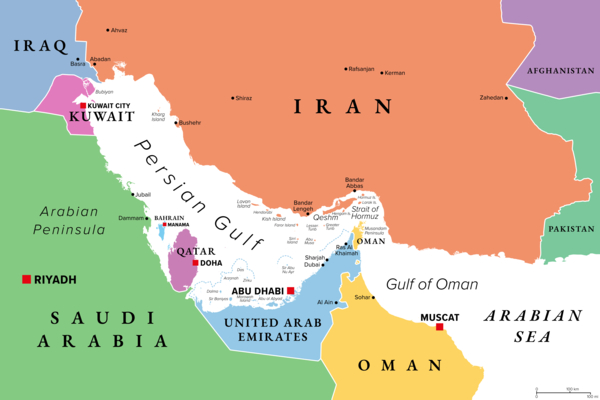
Oil prices surged over 10% following President Trump's threats against Iran, with WTI crude jumping above $110/barrel. The closure of the Strait of Hormuz threatens 20% of global oil and LNG exports. While crude prices have doubled this year, major oil stocks like Chevron and ExxonMobil have only risen 30%, suggesting significant upside potential if elevated prices persist.
The Motley Fool•Matt Dilallo
AI Insight
Strong positioning to benefit from sustained high oil prices. Cost-saving initiatives and high-return expansion projects position it for double-digit earnings growth. Stock has underperformed relative to crude price increases, suggesting significant upside if elevated prices continue.
While major U.S. stock indexes are down through March 2026, five sectors are outperforming: Energy (up 40% due to Middle East conflict and oil prices), Utilities (up 8% from AI data center demand), Consumer Staples (up 7.5% for defensive stability), Materials (up 7.4% supporting AI infrastructure), and Industrials (up from infrastructure and defense spending). These sectors offer stability and dividend income rather than high growth.
The Motley Fool•Stefon Walters
AI Insight
Up 42% year-to-date, one of S&P 500's best performers due to rising crude oil prices
Exxon Mobil shares rose 2.85% on Thursday as geopolitical tensions with Iran drove crude oil prices higher, with WTI crude jumping 8.2% to $108.36/barrel. The energy sector outperformed broader markets amid President Trump's warnings of potential military action against Iran. The IEA warned of deepening supply shocks, with 12 million barrels per day already lost. Exxon trades above key moving averages with bullish technical signals, though momentum is moderating.
Benzinga•Lekha Gupta
AI Insight
Stock gained 2.85% on Thursday driven by higher crude prices from geopolitical tensions. Trading above 20-day and 100-day moving averages with bullish MACD signals. Up 39.39% over 12 months. However, analyst price target of $145.23 is below current price, and momentum is moderating.
The International Energy Agency warns of the most severe energy crisis in modern history, with the Iran war causing a loss of 12 million barrels per day of oil supply—more than double the combined impact of the 1973 Arab oil embargo and 1979 Iranian Revolution. IEA Executive Director Fatih Birol cautions that April will be 'much worse' than March, with the Strait of Hormuz shutdown exacerbating the crisis. Energy stocks and ETFs are positioned as key trades to capitalize on the oil shock.
Benzinga•Erica Kollmann
AI Insight
As an integrated major oil company, Exxon Mobil benefits from higher crude prices driven by the supply crisis. The article highlights that integrated majors gain from upstream profits, refining margins, and dividends during oil price spikes.
Exxon Mobil shares fell 4.52% on Wednesday as investors unwound the 'war premium' that had supported oil prices during Iran conflict escalation. President Trump indicated the U.S. could wind down its military campaign within 2-3 weeks, and Iran signaled willingness to end the war with security guarantees, causing WTI crude to drop 2% to ~$100/barrel. Despite the pullback, XOM remains 35.64% up over 12 months with technical indicators showing overbought conditions (RSI at 72.11) but bullish MACD momentum.
Benzinga•Lekha Gupta
AI Insight
Stock declined 4.52% due to de-escalation expectations in Iran conflict, unwinding the geopolitical premium that had supported energy prices. However, sentiment is moderately negative rather than strongly negative given the stock remains up 35.64% YTM, maintains bullish technical momentum (MACD), and carries a Buy rating with $145.23 average price target.
Energy stocks are surging due to Iran's disruption of the Strait of Hormuz, making energy security a priority again. ExxonMobil, Chevron, and Enterprise Products Partners are well-positioned for long-term success with strong cash flows, dividend histories, and resilience. The article suggests buying these stocks soon as institutional money rotates into energy, potentially closing the window for attractive valuations.
The Motley Fool•Keith Speights
AI Insight
Shares have soared year-to-date; company generates strong free cash flow, repurchases shares, pays attractive dividends with 43 consecutive years of increases, and is well-positioned for success regardless of Middle East crisis resolution.
The global industrial lubricants market is projected to grow from $89.58 billion in 2024 to $113.78 billion by 2031, with a CAGR of 3.7%. Growth is driven by industrial mechanization, rising adoption of synthetic and bio-based lubricants, and increasing demand for high-performance solutions in manufacturing, automotive, and energy sectors. Asia Pacific leads the market, while synthetic lubricants dominate the segment, though bio-based lubricants show the highest growth potential.
GlobeNewswire Inc.•The Insight Partners
AI Insight
Major player in industrial lubricants market positioned to benefit from projected 3.7% CAGR growth and rising demand for synthetic and bio-based lubricant formulations.
Stocks surged on ceasefire optimism between the U.S. and Iran, with the S&P 500 up 2% and Nasdaq up 3%. However, CNBC's Michelle Caruso-Cabrera argues the ceasefire hopes may be misleading, citing leadership uncertainty in Iran and incomplete U.S. military objectives. Prediction markets suggest the conflict will likely extend beyond April, with only 39% odds of a ceasefire by month-end.
Benzinga•Daragh Thomas
AI Insight
Similar to other oil majors, benefits from ceasefire hopes but faces headwinds from analyst skepticism about deal sustainability and extended conflict timeline.