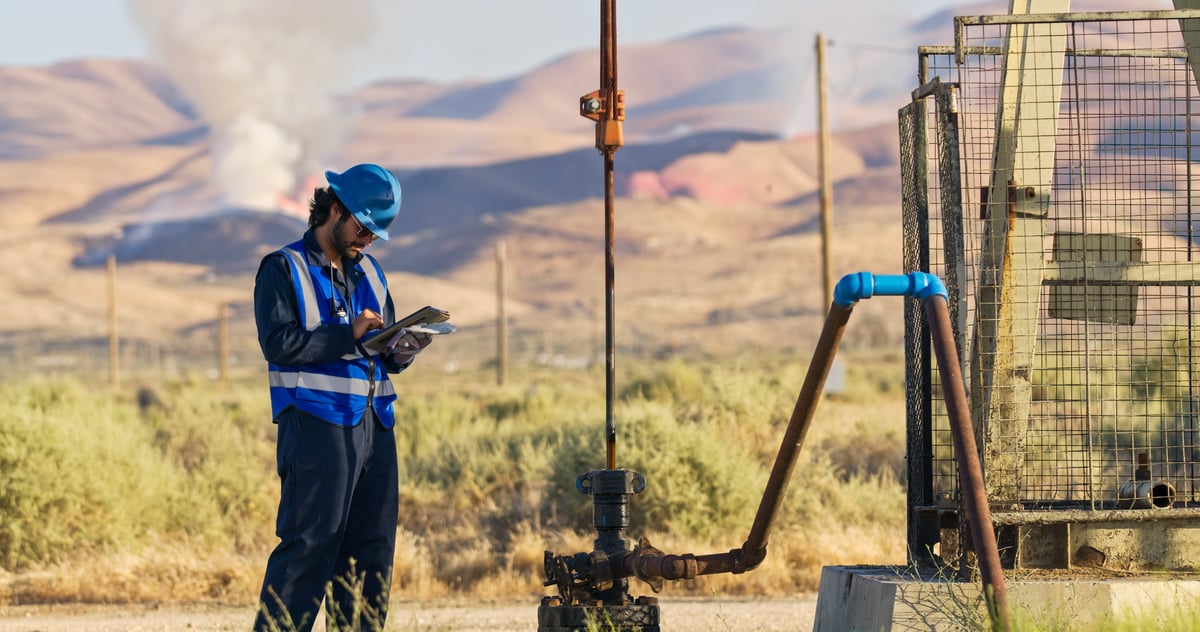
Occidental Petroleum is an independent exploration and production company with operations in the United States, Latin America, and the Middle East. At the end of 2024, the company reported net proved reserves of 4.6 billion barrels of oil equivalent. Net production averaged 1.326 million barrels of oil equivalent per day in 2024 at a ratio of roughly 52% oil and natural gas liquids and 48% natural gas.
The chart shows the growth of an initial investment of $10,000 in Occidental Petroleum Corporation, comparing it to the performance of the S&P 500 index. All prices have been adjusted for splits and dividends.
Returns By Period
Occidental Petroleum Corporation (OXY) has returned 52.69% so far this year and 61.75% over the past 12 months. Looking at the last ten years, OXY has achieved an annualized return of -0.86%, underperforming the Benchmark (SPY), which averaged 12.23% per year.
OXY
1M16.61%
6M39.93%
YTD52.69%
1Y61.75%
5Y20.51%
10Y-0.86%
Benchmark (SPY)
1M-3.85%
6M-2.35%
YTD-4.36%
1Y34.06%
5Y9.80%
10Y12.23%
Monthly Returns
The table below presents the monthly returns of Occidental Petroleum Corporation (OXY) with color gradation from worst to best to easily spot seasonal factors.
Jan
Feb
Mar
Apr
May
Jun
Jul
Aug
Sep
Oct
Nov
Dec
2026
10.06%
21.02%
15.37%
-1.73%
2025
-6.89%
4.45%
0.43%
-19.77%
3.73%
0.53%
4.46%
9.22%
-0.42%
-13.18%
2.31%
-1.70%
2024
-4.34%
4.66%
6.58%
1.30%
-4.84%
1.30%
-3.86%
-6.38%
-8.32%
-2.19%
0.16%
-2.45%
2023
4.00%
-8.87%
6.70%
-6.40%
-5.44%
1.92%
7.09%
0.22%
1.92%
-4.91%
-4.83%
1.03%
2022
28.96%
17.40%
27.99%
-3.04%
27.10%
-16.64%
10.67%
8.95%
-11.25%
13.94%
-6.12%
-10.40%
2021
13.01%
28.99%
-2.74%
-5.44%
1.21%
17.25%
-20.55%
-1.57%
15.55%
12.44%
-13.61%
-5.54%
2020
-4.59%
-17.53%
-65.52%
50.36%
-19.16%
41.86%
-14.08%
-19.11%
-20.49%
-8.43%
70.19%
8.87%
2019
10.34%
-1.65%
-0.26%
-11.97%
-15.79%
-0.04%
0.71%
-14.75%
3.76%
-9.34%
-5.35%
6.10%
2018
1.30%
-12.56%
-1.13%
19.12%
9.41%
-1.15%
1.07%
-3.88%
2.66%
-18.53%
4.60%
-14.80%
2017
-6.23%
-3.50%
-4.30%
-2.90%
-4.24%
1.32%
2.93%
-3.86%
7.57%
1.19%
8.20%
4.11%
2016
14.01%
-1.02%
0.88%
-0.93%
3.29%
-4.74%
-0.01%
-1.50%
-2.29%
Performance Indicators
The charts below present risk-adjusted performance metrics for Occidental Petroleum Corporation (OXY) and compare them to a Benchmark (SPY). These indicators evaluate an investment's returns against its associated risks.
Sharpe ratio
Sortino ratio
Omega ratio
Calmar ratio
Martin ratio
sharpe ratio
The Sharpe ratio helps investors understand how much return they're getting for the level of risk taken. A higher Sharpe ratio indicates better risk-adjusted performance, meaning more reward for each unit of risk.
These values reflect how efficiently the investment has delivered returns relative to its volatility over different time periods. All figures are annualized and based on daily total returns.
The chart below shows the rolling Sharpe ratio of OXY compared to the benchmark. This view highlights how the investment's risk-adjusted performance has changed over time.
Volatility Chart
The current Occidental Petroleum Corporation volatility is 2.30%, representing the standart deviation of percentage change in the investments's value, either up or down over the past month. The chart below shows the rolling one-month volatility.
Drawdowns Chart
The Drawdowns chart displays portfolio losses from any high point along the way. It shows the maximum percentage drop from a peak to a trough over a specified period, indicating the risk of significant losses. Although chart shows positive values, it represents the percentage drop from the peak, so a value of 10% means the portfolio has dropped 10% from its highest point.
Income Statement
The income statement provides a summary of a company's revenues, expenses, and profits over a specific period. It shows how much money the company earned (revenues) and how much it spent (expenses), leading to the net income or profit. This statement is crucial for understanding a company's financial performance and profitability.
2025
2024
2023
2022
2021
2020
2019
2018
2017
2016
2015
2014
2013
2012
2011
Liabilities And Equity (USD)
84.19B
85.45B
74.01B
72.61B
75.04B
80.06B
109.33B
43.85B
42.03B
43.11B
43.44B
56.26B
69.44B
64.21B
60.04B
Equity Attributable To Parent (USD)
36.03B
34.16B
30.25B
30.09B
20.33B
18.57B
34.23B
-172.00M
20.57B
21.50B
24.35B
34.96B
43.13B
40.02B
37.62B
Equity Attributable To Noncontrolling Interest (USD)
Occidental Petroleum (OXY) shares surged 4.62% on Thursday as the Energy sector led market gains amid geopolitical tensions. Trump's warnings of potential military action against Iran within 2-3 weeks triggered crude oil prices to spike, with WTI crude jumping 8.2% to $108.36/barrel and Brent crude rising 8% to $109.16. The IEA warned of deepening supply shocks, with 12 million barrels per day already lost. OXY outperformed its energy peers with a 4.42% gain versus the sector's 2.27%, supported by bullish technical indicators including a golden cross and uptrend structure.
Benzinga•Lekha Gupta
AI Insight
Stock up 4.62% on strong energy sector momentum driven by crude price surge from geopolitical tensions. Trading 9.4% above 20-day SMA and 38.2% above 100-day SMA with constructive technical indicators (golden cross, bullish MACD). Outperforming energy peers significantly.
U.S. markets rallied on April 1, 2026, driven by easing Iran war concerns and falling oil prices. The S&P 500 rose 0.72%, Nasdaq climbed 1.16%, and the Dow added 0.48%. Semiconductor stocks surged while energy stocks declined sharply. Nike tumbled 15% on disappointing earnings, while Eli Lilly jumped on FDA approval of its obesity pill. Despite today's gains, the S&P 500 remains down 4% year-to-date.
The Motley Fool•Emma Newbery
AI Insight
Stock declined 4.17% as falling oil prices hurt energy sector; oil dropped 15% amid Iran conflict resolution hopes
Bab el-Mandeb, a critical strait connecting the Red Sea to the Arabian Sea, has become an increasingly important oil chokepoint following Iran's blockade of the Strait of Hormuz. The Houthis, backed by Iran, have previously disrupted tanker traffic in the region and could do so again, potentially sending crude prices to $150-$200+ per barrel if both major chokepoints close simultaneously. U.S. oil producers with limited Persian Gulf exposure would benefit from such price increases.
The Motley Fool•Matt Dilallo
AI Insight
Company has 84% domestic production with additional assets in Algeria, Oman, and UAE, providing insulation from Middle East disruptions. Can capitalize on higher oil prices by ramping up U.S. drilling activities. Positioned to benefit from supply shocks at Bab el-Mandeb and Strait of Hormuz.
Stocks surged on ceasefire optimism between the U.S. and Iran, with the S&P 500 up 2% and Nasdaq up 3%. However, CNBC's Michelle Caruso-Cabrera argues the ceasefire hopes may be misleading, citing leadership uncertainty in Iran and incomplete U.S. military objectives. Prediction markets suggest the conflict will likely extend beyond April, with only 39% odds of a ceasefire by month-end.
Benzinga•Daragh Thomas
AI Insight
Oil price volatility and uncertain geopolitical resolution create neutral outlook despite initial market rally.
With the Strait of Hormuz closed and Middle Eastern oil supplies disrupted, concerns about a 1973-style oil embargo have emerged. However, current oil price increases are far less severe than the 1973 crisis, and the global economy is better positioned to handle energy shocks due to increased renewable energy adoption, improved efficiency, and reduced Middle East dependence. North American energy producers are recommended as portfolio hedges against further oil price increases.
The Motley Fool•Brett Schafer
AI Insight
Recommended as a secure hedge against oil price spikes due to its large exposure to U.S. oil production, which is less vulnerable to Middle Eastern supply disruptions.
Oil prices have surged over 70% this year due to the Iran conflict, with Brent crude exceeding $100 a barrel. Energy stocks have rallied accordingly, with analyst Matt DiLallo predicting that Occidental Petroleum and Diamondback Energy could double in 2026 if the conflict escalates further. Both companies are positioned to generate substantial free cash flow at elevated oil prices, which they can deploy for debt reduction, share buybacks, and shareholder returns.
The Motley Fool•Matt Dilallo
AI Insight
Already up 60% this year with strong fundamentals. Sale of OxyChem subsidiary provides $9.7B for debt reduction. Positioned to generate $1.2B+ in incremental free cash flow with potential for further gains if oil prices remain elevated. Can accelerate shareholder returns through buybacks and debt reduction.
Warren Buffett's strategic investments in Occidental Petroleum (27% stake) and Chevron (6.5% stake) are paying off as crude prices surge due to the Iran conflict. Both companies have restructured their portfolios to thrive at lower oil prices while generating substantial free cash flow at current elevated prices, validating Buffett's investment thesis.
The Motley Fool•Matt Dilallo
AI Insight
Company has successfully reduced debt through asset sales and free cash flow generation. Expected to generate $1.2 billion additional free cash flow this year even without oil price increases, with even larger cash flows at current elevated prices. Strategic acquisitions (Anadarko, CrownRock) have strengthened its position.
Elon Musk announced Terafab, a $25 billion joint venture between Tesla, SpaceX, and XAI to build a vertically integrated semiconductor factory producing 1 terawatt of AI computing power annually. The facility aims to address supply chain bottlenecks and support Tesla's robotaxi and humanoid robot ambitions, plus SpaceX's orbital AI satellite constellation. While ambitious, industry experts question feasibility given the complexity of chip fabrication and Musk's mixed track record on delivery timelines.
The Motley Fool•Motley Fool Staff
AI Insight
Energy stock subject to geopolitical volatility from Iran conflict; shares retreated on de-escalation news despite strong company operations.
With oil prices elevated above $100 per barrel due to geopolitical tensions and the Strait of Hormuz closure, Occidental Petroleum and Chevron are positioned as inflation hedges. Both companies have limited Middle East exposure and significant North American operations, making them attractive if oil prices remain high throughout 2026.
The Motley Fool•Brett Schafer
AI Insight
Stock has surged 44.5% year-to-date with only 15% Middle East exposure. Company is positioned to benefit from increased investment in North American oil projects. Trading at attractive valuation (5x peak FCF) if oil stays above $100/barrel, making it a good inflation hedge.
Warren Buffett and successor Greg Abel have spent $78 billion repurchasing Berkshire Hathaway's own stock since July 2018, more than the combined spending on Apple, Chevron, Bank of America, and Occidental Petroleum. The buyback program, which resumed in March 2026 after a 21-month hiatus, has reduced outstanding shares by 12.6% and is designed to increase earnings per share and attract long-term investors.
The Motley Fool•Sean Williams
AI Insight
Listed as a core Berkshire position but included only as a comparison point in the buyback analysis without independent company assessment.