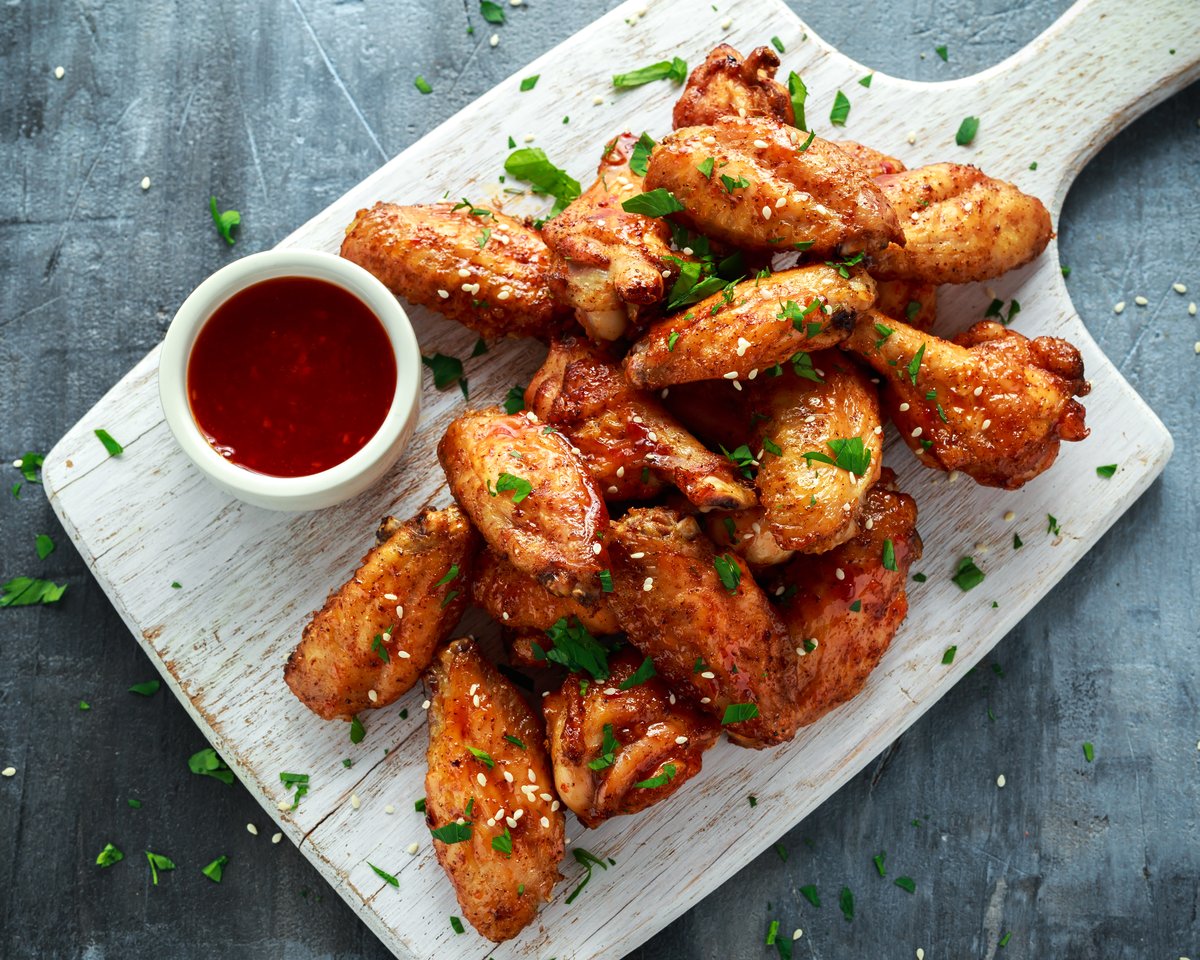
Wingstop is a fast casual restaurant concept built around a simple chicken-centric menu. The firm primarily offers bone-in and boneless wings, tenders, and a chicken sandwich, customizable across 12 flavors. The banner generated $5.3 billion in system sales in 2025 across 3,056 units, with 85% located in the US. Wingstop largely operates as a franchisor, with 98% of units franchised, and earns revenue largely from collecting royalties and advertising fees paid by franchisees, with a smaller contribution from company-owned restaurant sales.
The chart shows the growth of an initial investment of $10,000 in Wingstop Inc, comparing it to the performance of the S&P 500 index. All prices have been adjusted for splits and dividends.
Returns By Period
Wingstop Inc (WING) has returned -36.90% so far this year and -31.47% over the past 12 months. Looking at the last ten years, WING has achieved an annualized return of 20.20%, outperforming the Benchmark (SPY), which averaged 12.23% per year.
WING
1M-35.46%
6M-38.85%
YTD-36.90%
1Y-31.47%
5Y2.09%
10Y20.20%
Benchmark (SPY)
1M-3.85%
6M-2.35%
YTD-4.36%
1Y34.06%
5Y9.80%
10Y12.23%
Monthly Returns
The table below presents the monthly returns of Wingstop Inc (WING) with color gradation from worst to best to easily spot seasonal factors.
Jan
Feb
Mar
Apr
May
Jun
Jul
Aug
Sep
Oct
Nov
Dec
2026
9.82%
-0.60%
-38.29%
-1.83%
2025
3.39%
-20.00%
-5.22%
17.04%
28.94%
-0.67%
12.14%
-12.81%
-22.51%
-13.86%
22.78%
-8.41%
2024
10.79%
24.48%
3.53%
5.12%
-5.69%
14.48%
-12.34%
0.03%
8.64%
-31.06%
12.14%
-13.21%
2023
12.61%
7.80%
7.77%
10.00%
-0.47%
0.70%
-15.93%
-3.75%
11.17%
2.16%
26.69%
7.17%
2022
-11.41%
-5.93%
-19.31%
-22.36%
-13.56%
-6.54%
67.64%
-9.09%
12.46%
24.85%
3.53%
-16.72%
2021
12.82%
-10.66%
-8.09%
16.35%
-10.53%
10.41%
8.12%
-0.36%
-5.03%
3.59%
-7.16%
5.09%
2020
7.58%
-9.00%
-5.90%
56.05%
6.88%
13.30%
12.38%
3.97%
-17.04%
-15.32%
6.81%
4.17%
2019
3.66%
1.23%
15.07%
-1.77%
5.42%
19.36%
0.16%
7.57%
-12.48%
-4.26%
-4.12%
8.21%
2018
23.27%
-6.25%
4.40%
3.65%
3.39%
2.60%
-4.60%
36.13%
4.76%
-8.85%
4.09%
-3.11%
2017
-4.85%
-8.20%
6.16%
4.10%
-2.86%
8.12%
-2.79%
8.21%
2.50%
1.35%
15.60%
-0.54%
2016
7.50%
11.91%
-2.54%
-8.55%
15.92%
-3.55%
-8.17%
14.00%
-3.36%
Performance Indicators
The charts below present risk-adjusted performance metrics for Wingstop Inc (WING) and compare them to a Benchmark (SPY). These indicators evaluate an investment's returns against its associated risks.
Sharpe ratio
Sortino ratio
Omega ratio
Calmar ratio
Martin ratio
sharpe ratio
The Sharpe ratio helps investors understand how much return they're getting for the level of risk taken. A higher Sharpe ratio indicates better risk-adjusted performance, meaning more reward for each unit of risk.
These values reflect how efficiently the investment has delivered returns relative to its volatility over different time periods. All figures are annualized and based on daily total returns.
The chart below shows the rolling Sharpe ratio of WING compared to the benchmark. This view highlights how the investment's risk-adjusted performance has changed over time.
Volatility Chart
The current Wingstop Inc volatility is 3.25%, representing the standart deviation of percentage change in the investments's value, either up or down over the past month. The chart below shows the rolling one-month volatility.
Drawdowns Chart
The Drawdowns chart displays portfolio losses from any high point along the way. It shows the maximum percentage drop from a peak to a trough over a specified period, indicating the risk of significant losses. Although chart shows positive values, it represents the percentage drop from the peak, so a value of 10% means the portfolio has dropped 10% from its highest point.
Income Statement
The income statement provides a summary of a company's revenues, expenses, and profits over a specific period. It shows how much money the company earned (revenues) and how much it spent (expenses), leading to the net income or profit. This statement is crucial for understanding a company's financial performance and profitability.
2025
2023
2022
2021
2020
2019
2018
2017
2016
2015
Liabilities And Equity (USD)
693.41M
377.83M
424.19M
249.20M
211.57M
166.11M
139.75M
119.84M
111.80M
121.14M
Equity Attributable To Parent (USD)
-736.76M
-457.37M
-390.86M
-309.53M
-341.31M
-209.43M
-224.83M
-48.25M
-74.63M
-9.67M
Equity Attributable To Noncontrolling Interest (USD)
The S&P 500 is consolidating sideways within a bear pennant pattern, signaling potential downside risk. Moving averages are acting as resistance, and credit spreads are widening despite equity gains, indicating a lack of sustainable rally strength. Bitcoin is also working through a bear flag pattern, with Wingstop stock correlating negatively and suggesting weakness ahead.
Investing.com•Michael Kramer
AI Insight
Stock dropped to lowest level since September 2023 and has been hammered from late 2024 peak. Serves as a liquidity gauge and leading indicator for broader market weakness.
Wingstop director Kilandigalu Madati sold 2,700 shares worth ~$704,000 on Feb. 25, 2026, reducing his holdings by 51%. The sale occurs as Wingstop's stock has declined ~10% in 2026 and same-store sales dropped 6% year-over-year in fiscal 2025. While revenue grew to $696.9M due to record store openings, the company faces challenges with a high P/E ratio of 36 and debt exceeding $1 billion against total assets of $693.4 million. Analysts recommend selling at current valuations and observing performance before buying.
The Motley Fool•Robert Izquierdo
AI Insight
Stock has declined ~10% in 2026, same-store sales dropped 6% YoY, P/E ratio of 36 is elevated, debt of $1B+ exceeds total assets of $693.4M, and insider director sold 51% of holdings. While revenue grew due to new store openings, fundamental challenges and unfavorable valuation metrics warrant a negative outlook.
Wingstop's 21-year same-store sales growth streak ended in 2025 as domestic comps declined 5.6% in Q3 amid consumer pressure, particularly in core markets. Despite traffic headwinds, the asset-light franchise model and strong unit economics support continued expansion toward 480 net new restaurants. Management expects traffic pressure to persist through Q4 but targets a return to positive growth in 2026. The stock trades at 68x earnings, significantly higher than quick-service restaurant peers, limiting margin of safety at current valuations.
The Motley Fool•Bryan White
AI Insight
Mixed outlook with near-term headwinds (negative comps, traffic slowdown) offset by strong franchise fundamentals, continued expansion momentum, and upcoming growth initiatives (loyalty program, Smart Kitchen). High valuation relative to peers presents risk, but business quality and long-term opportunity remain intact. Awaiting Q4 results for clarity on trajectory.
The podcast discusses how companies owning the operating layers beneath consumer-facing businesses are increasingly valuable. Key topics include Nvidia's $2 billion investment in CoreWeave for AI infrastructure, restaurant tech integration improving efficiency, and the U.S. government's $1.5 billion investment in USA Rare Earth for national security. Analysts debate whether these investments represent strategic positioning or potential overextension.
The Motley Fool•Motley Fool Staff
AI Insight
Built for digital age with efficient small-format locations, strong third-party platform integration, and significant tech investment. Maintains margins while leveraging delivery platforms without margin drag.
The restaurant industry experienced a significant shift in 2025 as consumers prioritized value over premium pricing. Fast-casual chains like Sweetgreen, Cava, and Chipotle struggled significantly, while casual dining operators like Texas Roadhouse and Chili's gained market share. The trend is expected to continue into 2026, with quick-service restaurants and value-focused concepts better positioned to capture consumer spending.
The Motley Fool•Bryan White
AI Insight
Emerged as a strong performer by focusing on doing fewer things well with a digital-first model, successfully maintaining margins amid food-price inflation and consumer value-seeking behavior.
Fast-casual restaurant stocks experienced significant declines in 2025 due to aggressive pricing, valuation concerns, and consumer trade-down behavior toward convenience stores and casual dining. However, these stocks have rebounded sharply in early 2026 as investors reassess valuations and anticipate earnings reports. Key metrics to watch include same-store sales components (pricing vs. traffic) and whether companies can restore consumer perception of value and quality.
The Motley Fool•Motley Fool Staff
AI Insight
Highlighted as a top pick with fantastic operations, minimal staff model, simple menu, and strong growth trajectory. Franchise model allows faster expansion with significant white space domestically and internationally.
McDonald's is highlighted as an attractive dividend stock for passive income investors, with a $40,000 investment potentially generating $1,000 annually. The company is on track to become a Dividend King in 2026 with 49 consecutive years of dividend increases. Despite recent underperformance compared to the S&P 500, McDonald's franchise-heavy business model, international diversification, and expansion plans to 50,000 stores by 2027 make it a stable choice for risk-averse investors seeking quality dividend income.
The Motley Fool•Daniel Foelber
AI Insight
Referenced as a franchise-reliant restaurant company with higher operating margins, but not specifically analyzed or recommended.
The article argues that the key to becoming a better investor in 2026 is improving the ability to hold stocks through market volatility. The author recommends prioritizing investments in companies you genuinely love and care about, rather than solely focusing on highest upside potential, as emotional attachment makes it easier to resist selling during downturns. This psychological approach is illustrated through the author's personal portfolio examples.
The Motley Fool•Jon Quast
AI Insight
Author personally owns and loves the stock, praising its operating model with high digital order adoption, simple menu, high margins, and strong franchisee demand.
Darsana Capital initiated a new $189 million stake in Wingstop, purchasing 750,000 shares representing 4.45% of their portfolio. Despite recent same-store sales declines, the investment suggests potential long-term growth in the restaurant chain.
The Motley Fool•Josh Kohn-Lindquist
AI Insight
Stock has experienced a 29% decline over the past year, but shows long-term growth potential with plans to quadruple store count and consistent historical sales performance
Granite Investment Partners sold 64,977 shares of Wingstop, reducing its stake from $22.28 million to $1.19 million in the third quarter, despite the company's strong long-term performance and potential for future growth.
The Motley Fool•Josh Kohn-Lindquist
AI Insight
Despite a recent stock price decline and two quarters of same-store sales decline, the company shows long-term growth potential with plans to expand from nearly 3,000 to over 10,000 stores, and has historically outperformed the S&P 500