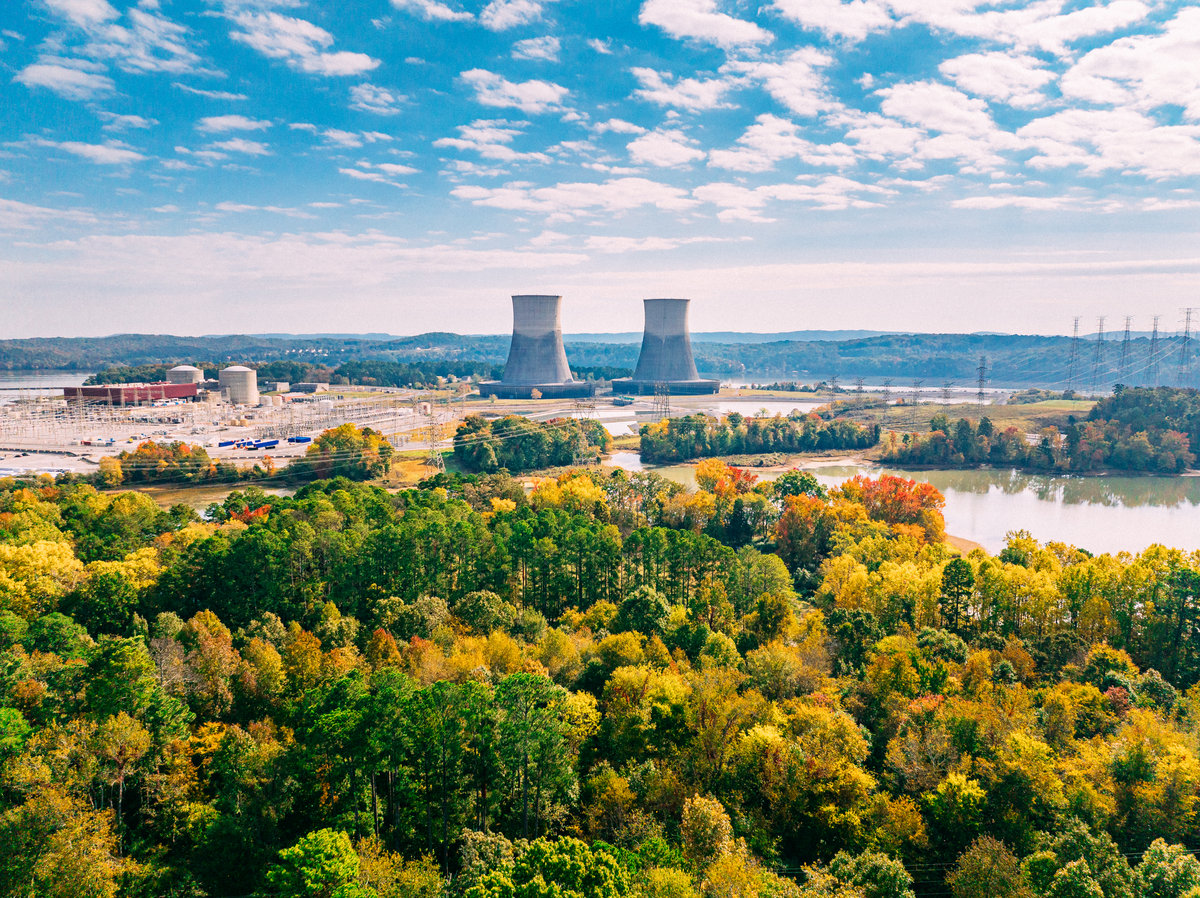
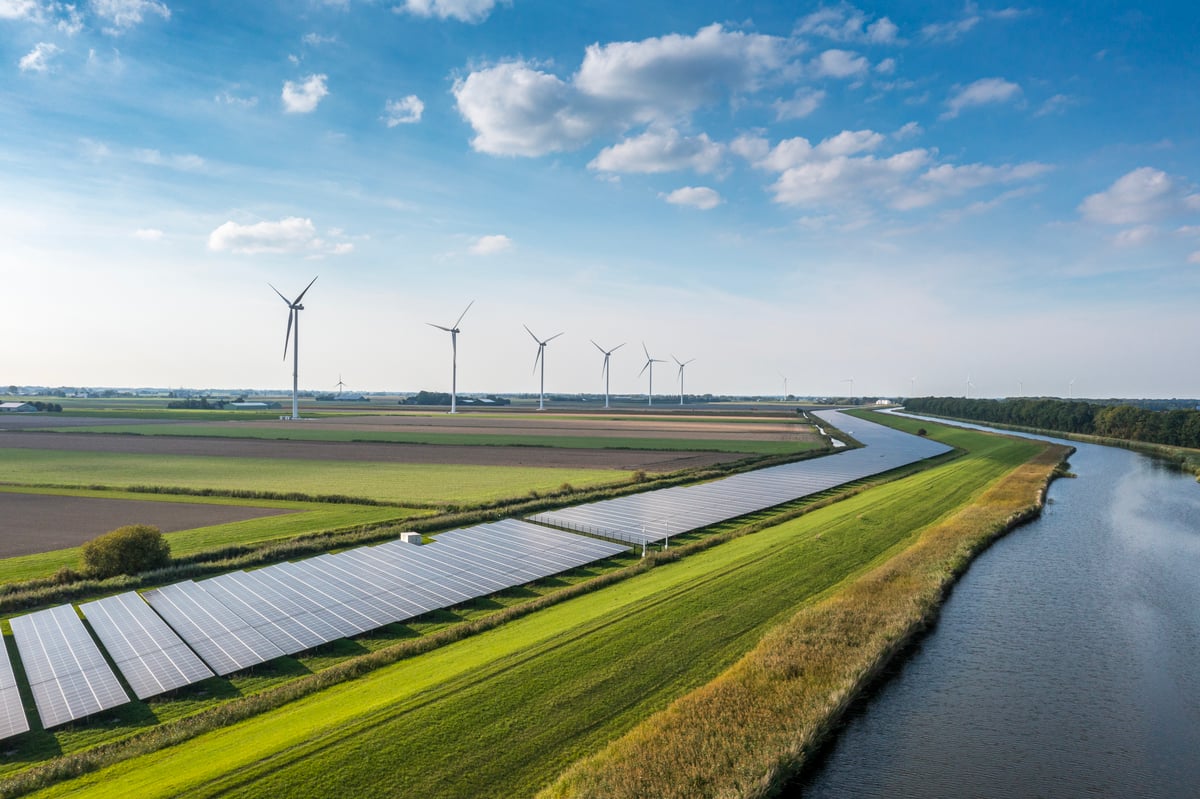
NextEra Energy's regulated utility, Florida Power & Light, is the largest rate-regulated utility in Florida. The utility distributes power to over 6 million customer accounts in Florida and owns 36 gigawatts of generation. FP&L contributes roughly 70% of NextEra's consolidated operating earnings. NextEra Energy Resources, the renewable energy segment, generates and sells power throughout the United States and Canada with nearly 40 GW of generation capacity, including natural gas, nuclear, wind, and solar.
The chart shows the growth of an initial investment of $10,000 in NextEra Energy, Inc., comparing it to the performance of the S&P 500 index. All prices have been adjusted for splits and dividends.
Returns By Period
NextEra Energy, Inc. (NEE) has returned 15.79% so far this year and 42.21% over the past 12 months. Looking at the last ten years, NEE has achieved an annualized return of 12.09%, underperforming the Benchmark (SPY), which averaged 12.23% per year.
NEE
1M0.92%
6M16.23%
YTD15.79%
1Y42.21%
5Y3.67%
10Y12.09%
Benchmark (SPY)
1M-3.85%
6M-2.35%
YTD-4.36%
1Y34.06%
5Y9.80%
10Y12.23%
Monthly Returns
The table below presents the monthly returns of NextEra Energy, Inc. (NEE) with color gradation from worst to best to easily spot seasonal factors.
Jan
Feb
Mar
Apr
May
Jun
Jul
Aug
Sep
Oct
Nov
Dec
2026
9.26%
6.39%
-0.56%
0.45%
2025
-1.26%
-0.47%
1.20%
-5.80%
4.67%
-0.47%
2.14%
0.87%
4.46%
6.65%
6.14%
-6.20%
2024
-3.17%
-5.48%
15.65%
4.79%
19.67%
-10.93%
6.90%
5.49%
4.66%
-5.78%
-0.91%
-9.16%
2023
-11.54%
-4.81%
8.78%
-0.55%
-3.94%
1.57%
-0.77%
-8.89%
-14.92%
3.96%
0.70%
3.74%
2022
-16.38%
0.29%
8.51%
-15.94%
6.46%
2.24%
7.86%
0.72%
-8.11%
-2.92%
8.33%
-2.11%
2021
4.74%
-10.68%
1.30%
2.66%
-5.92%
-0.16%
6.28%
7.03%
-6.69%
7.99%
1.57%
7.31%
2020
10.84%
-5.93%
-5.14%
0.07%
11.16%
-5.48%
17.12%
-0.70%
-0.52%
4.93%
-0.69%
4.09%
2019
3.65%
5.24%
3.09%
0.53%
2.43%
2.98%
1.37%
6.03%
6.48%
2.66%
-2.04%
3.62%
2018
1.27%
-4.07%
6.96%
-0.02%
1.30%
0.82%
-0.06%
1.81%
-1.55%
3.05%
4.72%
-3.65%
2017
3.50%
6.75%
-0.92%
3.94%
5.44%
-0.86%
3.72%
3.17%
-2.95%
5.22%
1.52%
-1.39%
2016
-0.43%
1.94%
8.56%
-2.27%
-5.66%
1.30%
4.52%
-10.89%
5.23%
Performance Indicators
The charts below present risk-adjusted performance metrics for NextEra Energy, Inc. (NEE) and compare them to a Benchmark (SPY). These indicators evaluate an investment's returns against its associated risks.
Sharpe ratio
Sortino ratio
Omega ratio
Calmar ratio
Martin ratio
sharpe ratio
The Sharpe ratio helps investors understand how much return they're getting for the level of risk taken. A higher Sharpe ratio indicates better risk-adjusted performance, meaning more reward for each unit of risk.
These values reflect how efficiently the investment has delivered returns relative to its volatility over different time periods. All figures are annualized and based on daily total returns.
The chart below shows the rolling Sharpe ratio of NEE compared to the benchmark. This view highlights how the investment's risk-adjusted performance has changed over time.
Volatility Chart
The current NextEra Energy, Inc. volatility is 1.10%, representing the standart deviation of percentage change in the investments's value, either up or down over the past month. The chart below shows the rolling one-month volatility.
Drawdowns Chart
The Drawdowns chart displays portfolio losses from any high point along the way. It shows the maximum percentage drop from a peak to a trough over a specified period, indicating the risk of significant losses. Although chart shows positive values, it represents the percentage drop from the peak, so a value of 10% means the portfolio has dropped 10% from its highest point.
Income Statement
The income statement provides a summary of a company's revenues, expenses, and profits over a specific period. It shows how much money the company earned (revenues) and how much it spent (expenses), leading to the net income or profit. This statement is crucial for understanding a company's financial performance and profitability.
2025
2023
2022
2021
2020
2019
2018
2017
2016
2015
2014
2013
2012
2011
Liabilities And Equity (USD)
212.72B
177.49B
158.94B
140.91B
127.68B
117.69B
103.70B
97.83B
89.99B
82.48B
74.93B
69.31B
64.44B
57.19B
Temporary Equity (USD)
-
1.26B
1.11B
245.00M
-
487.00M
468.00M
-
-
-
-
-
-
-
Equity Attributable To Parent (USD)
54.61B
47.47B
39.23B
37.20B
36.51B
37.01B
34.14B
28.21B
24.34B
22.57B
19.92B
18.04B
16.07B
14.94B
Equity Attributable To Noncontrolling Interest (USD)
The Vanguard Utilities ETF (VPU) offers a 2.5% dividend yield and has historically delivered 10% annualized total returns. With a $10,000 investment generating $250 in annual dividend income, the fund is well-positioned for future growth as U.S. power demand is expected to surge 58% over the next 20 years, driven by AI data centers and electric vehicles. Key holdings like NextEra Energy and Constellation Energy are positioned to benefit from this demand growth.
The Motley Fool•Matt Dilallo
AI Insight
As the largest holding in VPU with 12% allocation, NextEra has demonstrated strong historical growth (9% CAGR), expects 8%+ annual earnings growth, and has multiple growth catalysts including data center projects and nuclear reactor development.
The article compares two high-yield covered call ETFs: JEPI (low-volatility S&P 500 stocks) and JEPQ (Nasdaq-100 stocks). Given current macroeconomic challenges including slowing GDP growth, negative payroll trends, and inflation concerns, JEPI is recommended as the better choice due to its defensive stock portfolio, while JEPQ's tech-heavy exposure faces headwinds from valuation concerns and economic slowdown.
The Motley Fool•David Dierking
AI Insight
Included in JEPI's top holdings as a defensive stock with steady cash flows and demand, appropriate for economic uncertainty.
Recession odds for 2026 have risen to 28% according to prediction market Kalshi, up from below 20% in February due to poor economic data and geopolitical tensions. The article recommends two defensive ETFs—consumer staples and utilities—as hedges against potential economic downturns, as these sectors are more resilient during recessions.
The Motley Fool•Bram Berkowitz
AI Insight
Listed as a top holding in VPU utilities ETF. Mentioned as part of the defensive portfolio strategy but no specific sentiment expressed about the company itself.
The ProShares S&P 500 Dividend Aristocrats ETF (NOBL) could theoretically turn a $10,000 investment into $1 million over 44 years at its average 11.1% annual return, or 27 years with $500 monthly contributions. However, NOBL has underperformed the S&P 500 significantly, gaining only 2.8% in the past year versus the S&P 500's 15% gain. The fund holds 69 dividend aristocrat stocks with a 2.55% dividend yield and is suitable for patient, long-term investors seeking stable income.
The Motley Fool•Ben Gran
AI Insight
Mentioned as a top holding (1.7% of NOBL fund) in the energy sector. No specific performance commentary provided.
Nuclear energy stocks are positioned for growth due to increased geopolitical tensions affecting oil supplies, AI power demands, and government support for carbon-free energy. NextEra Energy is highlighted as a strong dividend play with a partnership with Alphabet to build nuclear plants, offering a 2.54% dividend yield with 32 consecutive years of increases.
The Motley Fool•James Hires
AI Insight
Strong dividend play with 32 consecutive years of dividend increases, 2.54% yield, solid financial metrics (19.45% net profit margin, 12% EPS growth), strategic partnership with Alphabet for nuclear expansion, and positioned to benefit from accelerating nuclear energy demand.
The article recommends a balanced investment strategy combining offensive and defensive stocks to navigate market uncertainty in Q2 2026. It highlights Johnson & Johnson, NextEra Energy, and Microsoft as stocks that offer both growth potential and defensive characteristics, with strong dividend histories and competitive advantages in their respective sectors.
Investing.com•Chris Markoch
AI Insight
Positioned as North America's largest wind and solar generator with strong positioning in clean energy transition. Offers predictable regulated cash flow from utility business, reaffirmed 6-8% annual earnings growth forecast through 2027, 31 consecutive years of dividend increases (Dividend Aristocrat), and disciplined capital allocation strategy.
NextEra Energy, despite recent stock weakness, is positioned to benefit from sustained high oil prices through its significant renewable energy portfolio and natural gas utility operations. When oil prices remain elevated, consumers shift to cheaper natural gas alternatives, and renewable energy becomes more economically attractive. The company's exposure to wind, solar, and natural gas sectors, plus data center demand, provides multiple avenues to capitalize on the $100-per-barrel oil scenario.
The Motley Fool•Todd Shriber
AI Insight
The article argues that NextEra is undervalued despite recent 2.5% decline, presenting multiple catalysts for benefiting from sustained high oil prices. The company's diversified exposure to renewables (wind/solar), natural gas utilities, and data center demand positions it well for the current energy environment. The author suggests the market is mispricing the stock given these fundamental advantages.
As AI continues to expand, the critical bottleneck shifts from chip production to power supply. The article identifies three energy companies positioned to capitalize on massive electricity demand from AI infrastructure: Brookfield Renewable (partnering with Microsoft and Google for 13.5 GW of clean energy), NextEra Energy (combining regulated utilities with growing clean energy operations), and Bloom Energy (with a $20 billion backlog for fuel cell systems). These companies offer different risk profiles for investors seeking exposure to the AI power infrastructure buildout.
The Motley Fool•Reuben Gregg Brewer
AI Insight
Largest regulated utility foundation providing stability; strong clean energy growth engine; 25+ years of consecutive dividend increases; projected 8% annual earnings growth through 2035; ~6% annual dividend growth through 2028; suitable for conservative investors
Nvidia shares climbed 1.44% to $175.18 on Monday, tracking a broader market rebound following President Trump's announcement of a five-day pause on planned strikes targeting Iranian energy infrastructure. The company announced a partnership with AES Corporation, Constellation Energy, Invenergy, NextEra Energy, Nscale Energy & Power, and Vistra Corp to develop AI factories that integrate with the grid as flexible energy assets, with commercial deployment expected later in 2026.
Benzinga•Lekha Gupta
AI Insight
Partnership with Nvidia and other industry leaders on AI factory development aligns with the company's growth strategy in advanced energy infrastructure.
The article identifies Brookfield Renewable, Clearway Energy, and NextEra Energy as top renewable energy stocks for long-term investors. These companies benefit from the multi-decade renewable energy megatrend, with expected annual earnings growth of 7-10%+ and rising dividends. They generate stable cash flows through long-term power purchase agreements and are expanding capacity to meet surging demand from AI data centers and other sources.
The Motley Fool•Matt Dilallo
AI Insight
Expected 8%+ annual adjusted earnings per share growth through 2035, significant renewable capacity expansion plans, partnerships with Google for data centers, and consistent dividend growth of 6% expected in 2027-2028.