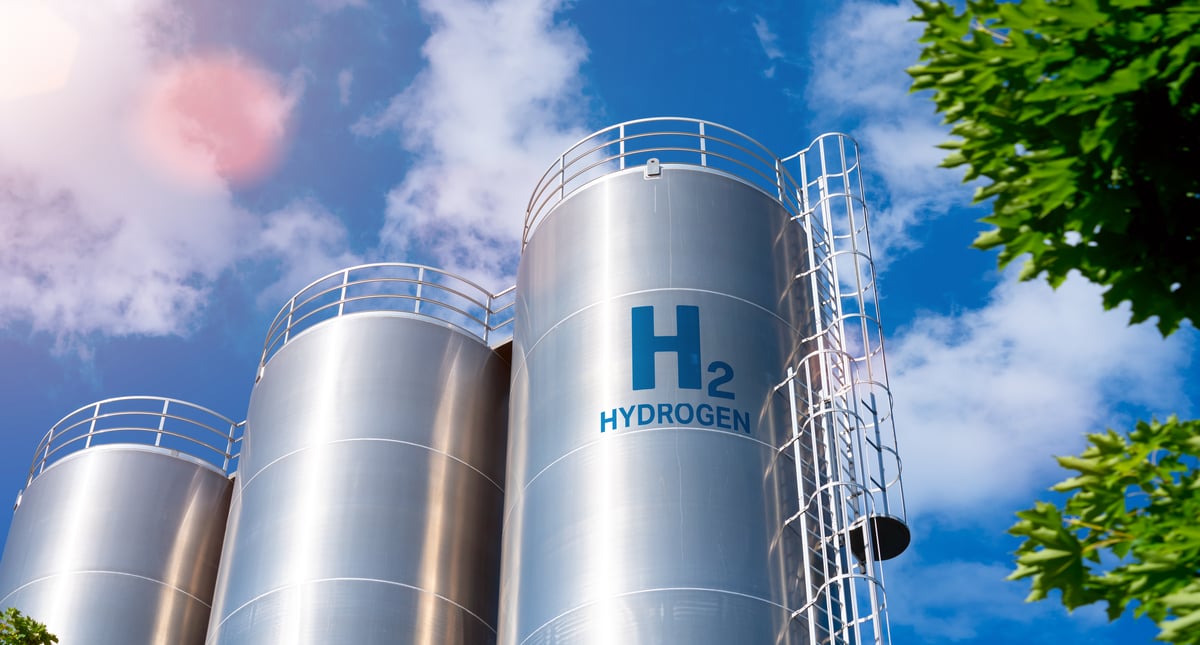
Linde is the largest industrial gas supplier in the world, with operations in over 100 countries. The firm's main products are atmospheric gases (including oxygen, nitrogen, and argon) and process gases (including hydrogen, carbon dioxide, and helium), as well as equipment used in industrial gas production. Linde serves a wide variety of end markets, including chemicals, manufacturing, healthcare, and steelmaking. Linde generated approximately $34 billion in revenue in 2025.
The chart shows the growth of an initial investment of $10,000 in Linde plc Ordinary Share, comparing it to the performance of the S&P 500 index. All prices have been adjusted for splits and dividends.
Returns By Period
Linde plc Ordinary Share (LIN) has returned 17.90% so far this year and 17.13% over the past 12 months. Looking at the last ten years, LIN has achieved an annualized return of 12.01%, underperforming the Benchmark (SPY), which averaged 12.23% per year.
LIN
1M1.41%
6M7.69%
YTD17.90%
1Y17.13%
5Y12.17%
10Y12.01%
Benchmark (SPY)
1M-3.85%
6M-2.35%
YTD-4.36%
1Y34.06%
5Y9.80%
10Y12.23%
Monthly Returns
The table below presents the monthly returns of Linde plc Ordinary Share (LIN) with color gradation from worst to best to easily spot seasonal factors.
Jan
Feb
Mar
Apr
May
Jun
Jul
Aug
Sep
Oct
Nov
Dec
2026
7.20%
10.61%
-2.41%
1.98%
2025
6.03%
4.95%
-0.74%
-1.90%
6.89%
0.86%
-2.03%
4.35%
-0.45%
-11.52%
-2.83%
3.99%
2024
-1.21%
9.93%
3.64%
-5.36%
-1.64%
1.08%
3.27%
4.86%
0.62%
-4.36%
0.98%
-9.18%
2023
4.18%
5.33%
1.53%
4.53%
-4.62%
7.26%
2.27%
-0.72%
-4.32%
3.02%
8.24%
-0.42%
2022
-8.01%
-8.49%
9.39%
-2.78%
3.22%
-11.13%
6.52%
-5.85%
-2.97%
9.11%
10.68%
-3.29%
2021
-7.99%
-1.60%
13.22%
2.40%
4.61%
-5.27%
6.11%
1.90%
-6.41%
8.01%
-1.02%
7.69%
2020
-4.89%
-6.26%
-9.57%
11.09%
9.82%
4.75%
15.86%
0.86%
-4.74%
-6.91%
13.90%
1.04%
2019
6.17%
5.69%
-0.24%
1.93%
0.37%
10.65%
-5.78%
-0.37%
3.44%
2.28%
3.69%
4.95%
2018
2.31%
-3.41%
-3.86%
Performance Indicators
The charts below present risk-adjusted performance metrics for Linde plc Ordinary Share (LIN) and compare them to a Benchmark (SPY). These indicators evaluate an investment's returns against its associated risks.
Sharpe ratio
Sortino ratio
Omega ratio
Calmar ratio
Martin ratio
sharpe ratio
The Sharpe ratio helps investors understand how much return they're getting for the level of risk taken. A higher Sharpe ratio indicates better risk-adjusted performance, meaning more reward for each unit of risk.
These values reflect how efficiently the investment has delivered returns relative to its volatility over different time periods. All figures are annualized and based on daily total returns.
The chart below shows the rolling Sharpe ratio of LIN compared to the benchmark. This view highlights how the investment's risk-adjusted performance has changed over time.
Volatility Chart
The current Linde plc Ordinary Share volatility is 1.23%, representing the standart deviation of percentage change in the investments's value, either up or down over the past month. The chart below shows the rolling one-month volatility.
Drawdowns Chart
The Drawdowns chart displays portfolio losses from any high point along the way. It shows the maximum percentage drop from a peak to a trough over a specified period, indicating the risk of significant losses. Although chart shows positive values, it represents the percentage drop from the peak, so a value of 10% means the portfolio has dropped 10% from its highest point.
Income Statement
The income statement provides a summary of a company's revenues, expenses, and profits over a specific period. It shows how much money the company earned (revenues) and how much it spent (expenses), leading to the net income or profit. This statement is crucial for understanding a company's financial performance and profitability.
2025
2024
2023
2022
2021
2020
2019
2018
2013
Liabilities And Equity (USD)
86.82B
80.15B
80.81B
79.66B
81.61B
88.23B
86.61B
93.39B
1.22B
Temporary Equity (USD)
13.00M
13.00M
13.00M
13.00M
13.00M
13.00M
113.00M
16.00M
12.85M
Equity Attributable To Parent (USD)
38.25B
38.09B
39.72B
40.03B
44.04B
47.32B
49.07B
51.60B
89.13M
Equity Attributable To Noncontrolling Interest (USD)
While major U.S. stock indexes are down through March 2026, five sectors are outperforming: Energy (up 40% due to Middle East conflict and oil prices), Utilities (up 8% from AI data center demand), Consumer Staples (up 7.5% for defensive stability), Materials (up 7.4% supporting AI infrastructure), and Industrials (up from infrastructure and defense spending). These sectors offer stability and dividend income rather than high growth.
The Motley Fool•Stefon Walters
AI Insight
Materials company supporting AI data center infrastructure with specialized cooling chemicals; among top performers in materials sector
The ProShares S&P 500 Dividend Aristocrats ETF (NOBL) could theoretically turn a $10,000 investment into $1 million over 44 years at its average 11.1% annual return, or 27 years with $500 monthly contributions. However, NOBL has underperformed the S&P 500 significantly, gaining only 2.8% in the past year versus the S&P 500's 15% gain. The fund holds 69 dividend aristocrat stocks with a 2.55% dividend yield and is suitable for patient, long-term investors seeking stable income.
The Motley Fool•Ben Gran
AI Insight
Listed as a top holding (1.7% of NOBL fund) as a chemical company. No specific performance commentary provided.
The U.S. liquid nitrogen market is expected to grow at a CAGR of 5.01% through 2035, driven by increasing demand in food processing, pharmaceuticals, healthcare, semiconductors, and cryogenic applications. The global market is valued at $89.70 billion in 2025 and projected to reach $151.48 billion by 2035 at a 5.46% CAGR, with Asia-Pacific leading at 39% market share. Cryogenic distillation technology dominates with 67% share, while coolant applications account for 61% of the market.
GlobeNewswire Inc.•Sns Insider
AI Insight
Company announced major investments in new air-separation infrastructure supporting commercial space sector, demonstrating expansion and market confidence.
Middle East geopolitical instability has disrupted global helium supply, with Qatar's QatarEnergy halting LNG operations that produce roughly one-third of world helium. This supply shock has caused helium spot prices to surge 20-50%, creating a critical shortage for semiconductor manufacturing and healthcare technology sectors. Industrial gas leader Linde, with its diversified global operations and market dominance, is well-positioned to capitalize on the shortage and benefit from pricing power.
Investing.com•Jeffrey Neal Johnson
AI Insight
Linde is positioned as the clear beneficiary of the helium shortage due to its market leadership, geographic diversification with major U.S. facilities, proven pricing power, strong financial performance (28 consecutive quarters of EPS beats, 20.30% net margin), and recent JPMorgan Overweight upgrade specifically citing the helium market tightening as a primary catalyst.
The global cryogenic equipment market is expected to grow from $14.74 billion in 2025 to $22.96 billion by 2030, at a CAGR of 9.3%. Growth is driven by the transition to clean energy, increased LNG infrastructure investments, and rising demand in Asia Pacific, particularly in China and India. The metallurgy segment is expected to dominate, while key players include Linde, Air Liquide, Air Products, and Chart Industries.
GlobeNewswire Inc.•Marketsandmarkets™
AI Insight
Identified as a key market player with strong diversified service portfolio and regional presence, positioned to benefit from growing cryogenic equipment demand driven by clean energy transition and LNG infrastructure expansion.
The global aircraft fuel cells market is projected to grow at a CAGR of 21.78% from $2.82 billion in 2025 to $24.63 billion by 2035, driven by sustainability demands and hydrogen segment efficiency. Hydrogen fuel cells lead the market, while proton exchange membrane fuel cells (PEMFC) technology dominates. Asia is expected to experience the highest growth rates due to industrial development and government hydrogen infrastructure support.
GlobeNewswire Inc.•Researchandmarkets.Com
AI Insight
As a hydrogen infrastructure and supply company, Linde benefits from increased hydrogen adoption in aviation and the market's emphasis on hydrogen storage technologies.
The global industrial oxygen market, valued at USD 71.45 billion in 2025, is expected to grow to USD 137.04 billion by 2035 at a CAGR of 6.73%. Growth is driven by rising demand from steel, chemicals, glass, and healthcare industries, alongside technological advances in on-site generation and stricter environmental regulations. Asia Pacific leads with 34.6% market share, while supply chain challenges and regulatory constraints pose potential headwinds.
GlobeNewswire Inc.•Sns Insider
AI Insight
Company announced plans to build a second CO₂ production facility at its Freeport site operational by 2027, showing strategic expansion and integration with oxygen production operations.
The hydrogen market is expected to reach $1.4 trillion by 2050, with Plug Power, Bloom Energy, and Linde positioned as potential leaders in the clean hydrogen sector despite current market challenges.
The Motley Fool•Catie Hogan
AI Insight
Most conservative investment with diversified business, consistent financials, dividend payments, and active involvement in green hydrogen projects
CSX Corp. announced Steve Angel as its new President and CEO, replacing Joe Hinrichs. Angel, with over 45 years of executive experience from Linde and General Electric, aims to drive safety, customer service, and shareholder value.
GlobeNewswire Inc.•Csx Corp.
AI Insight
Neutral impact as Steve Angel is transitioning out after successful leadership tenure
The High Purity Gas Market is expected to grow from USD 34.61 billion in 2024 to USD 55.79 billion by 2032, driven by increasing demand in semiconductor manufacturing, healthcare, and clean energy sectors.
GlobeNewswire Inc.•Sns Insider
AI Insight
Part of key market players expanding facilities and positioned for growth in semiconductor and industrial gas markets